Focused arrival windows
Useful updates and clear arrival timing.
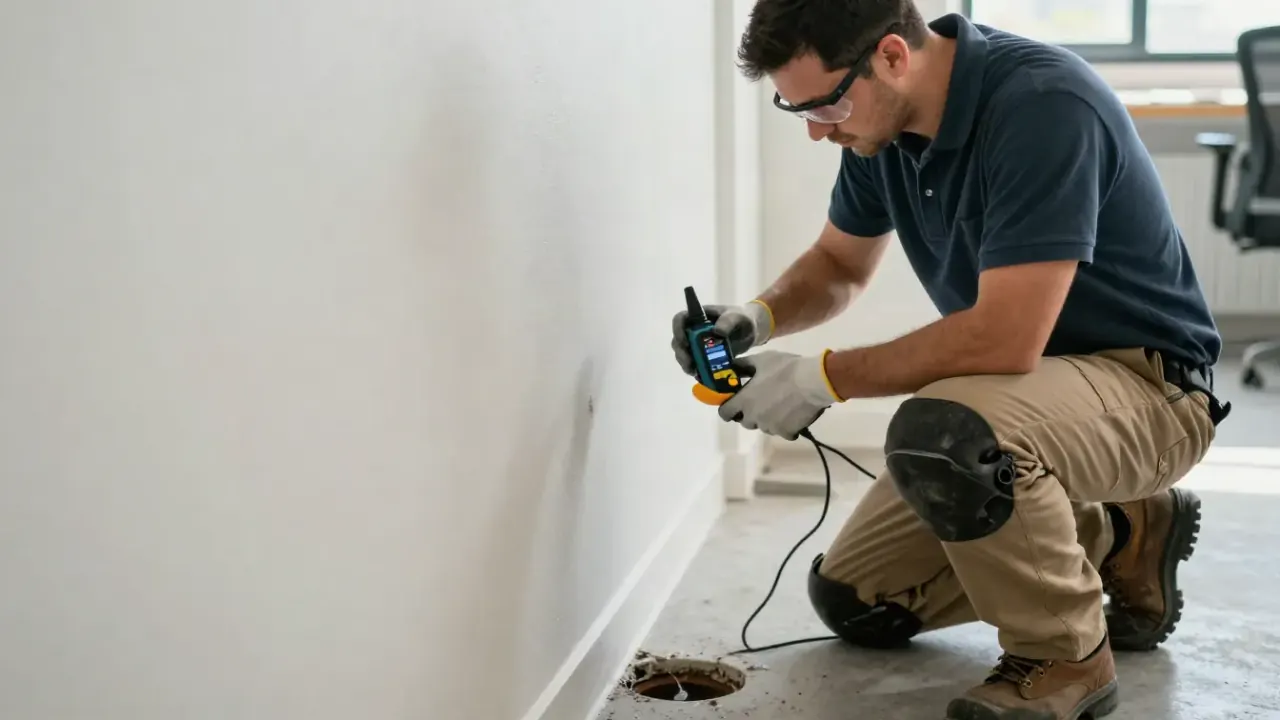
A High Water Bill Investigation Spring TX starts with one question: where is the water going? We pressure-test your line, scan with acoustic and thermal gear, and pinpoint the leak before we quote a repair. If your bill doubled and the yard is dry, call (281) 248-8538. We serve Harris County homeowners and businesses with same-day water bill leak detection in Spring.
Useful updates and clear arrival timing.
Review the approach and price before deciding.
Equipped vehicles and respectful cleanup.
Neighbors serving neighbors with follow-through.
Every investigation covers the full diagnostic sweep from meter to fixture. If the leak turns out to be a simple flapper or valve, we tell you and you can fix it yourself. If it needs a repair, we quote it flat-rate before we start.
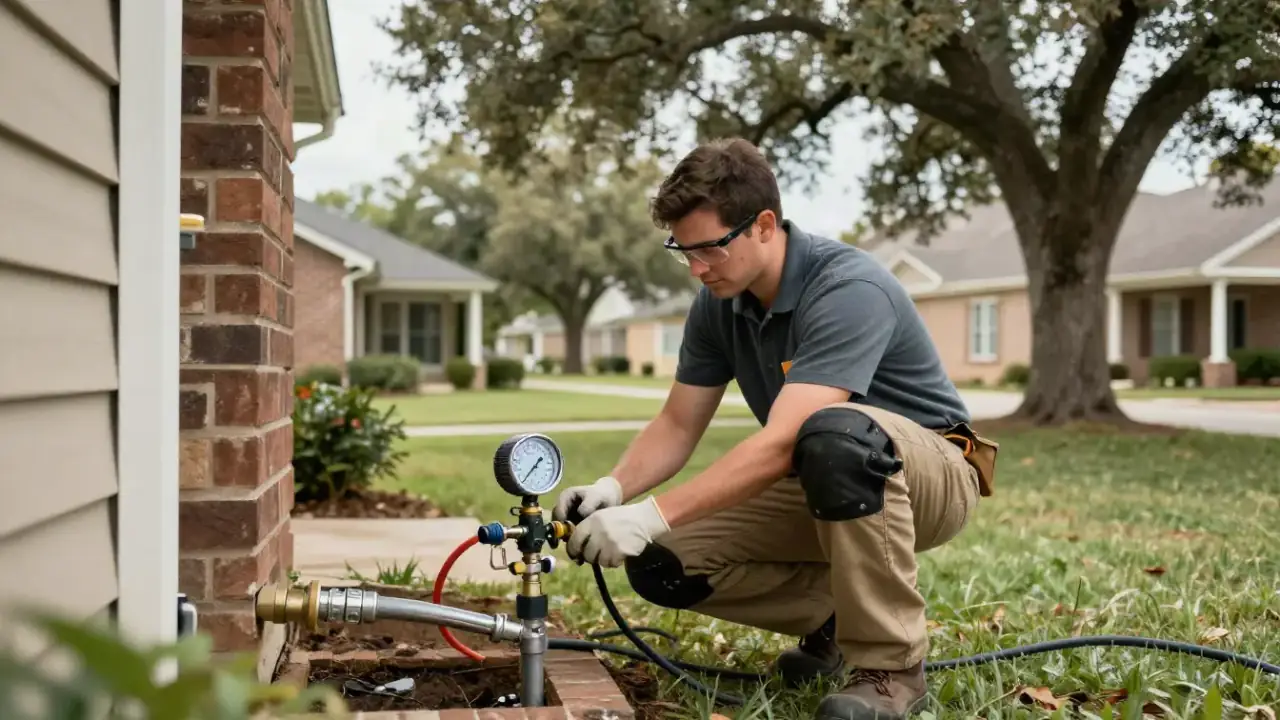
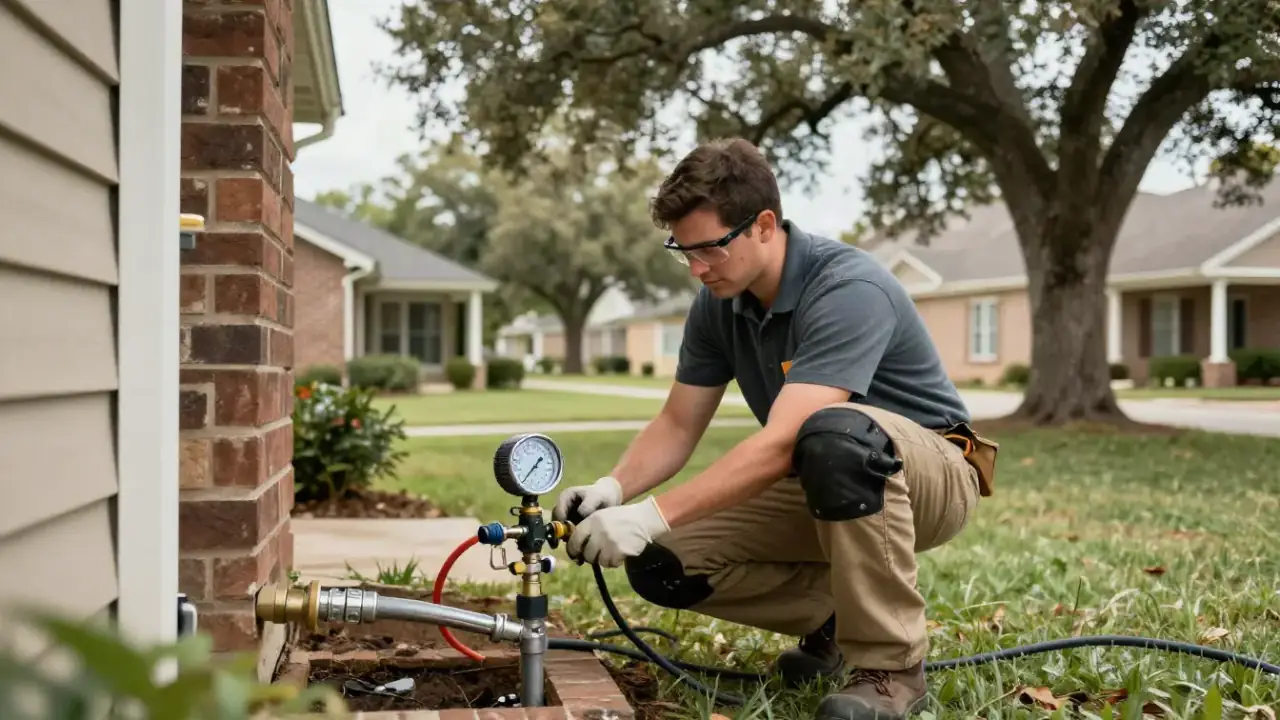
We confirm the meter's leak indicator is moving with all fixtures off, then pressure-test the house line with a pressure testing kit. A 10 psi drop over 15 minutes confirms a leak on that section and tells us where to focus.
We walk the slab, walls, and yard with Sewerin acoustic listening equipment and a Fluke thermal imaging camera. Pressurized water makes a distinct sound and a temperature signature, and together they narrow the leak to a small area.
When the leak is inside a wall or under the house, we run a General Pipe Cleaners video camera through the line. You see the crack or joint failure on screen before we quote the repair, so there is no exploratory demolition.
We isolate the irrigation loop and pool loop from the house supply and pressure-test each separately. A stuck zone valve or a broken lateral line is a common cause of a Spring water bill spike, and it is a cheap fix once found.
You get a written finding with the leak location marked and photographed, plus a flat-rate quote for the repair. If the fix is minor, we say so. If it is a slab leak, you get options for trenchless repair or conventional access.
Share what is happening and receive a clear next step from the local team.
High Water Bill Investigation Spring TX is a diagnostic service that isolates the source of an unexplained water bill spike using pressure testing, acoustic listening, and thermal imaging. We start at the meter, confirm whether water is moving with every fixture off, then work the line in sections. A slab leak, an underground pipe leak, or a running toilet all look the same on the bill. Our job is to prove which one it is before anyone cuts concrete or digs a trench.
Spring sits on expansive clay soil, and that clay moves with every wet and dry cycle. Copper pipe under a 1990s slab in Northampton or PEX tubing in a newer Creekside Park build both take stress from that movement. When a homeowner calls us saying "why is my water bill so high in Spring TX," the answer is usually a hidden pipe leak losing 2 to 10 gallons an hour. We confirm it with a water usage audit Spring TX before recommending repair.
We shut every fixture and appliance off, then watch the meter's leak indicator. If it spins, water is moving somewhere it should not. This takes 10 to 15 minutes and tells us whether the loss is on the supply side or the drain side.
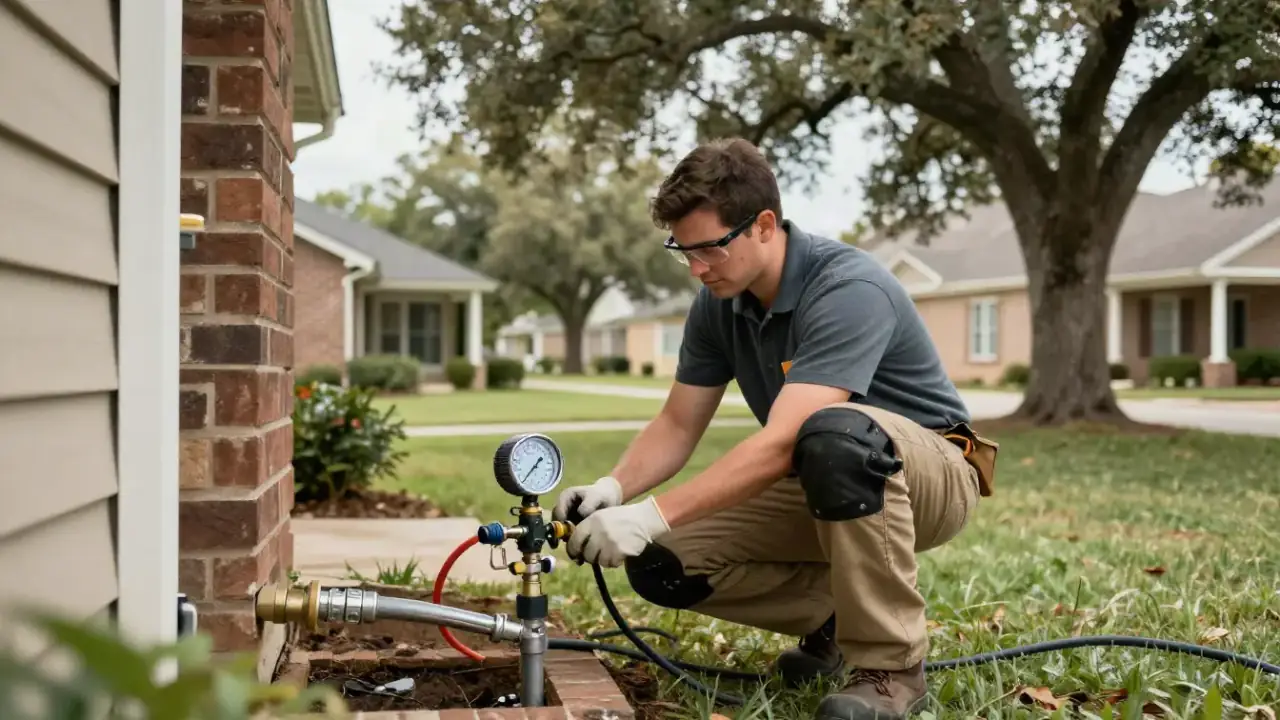
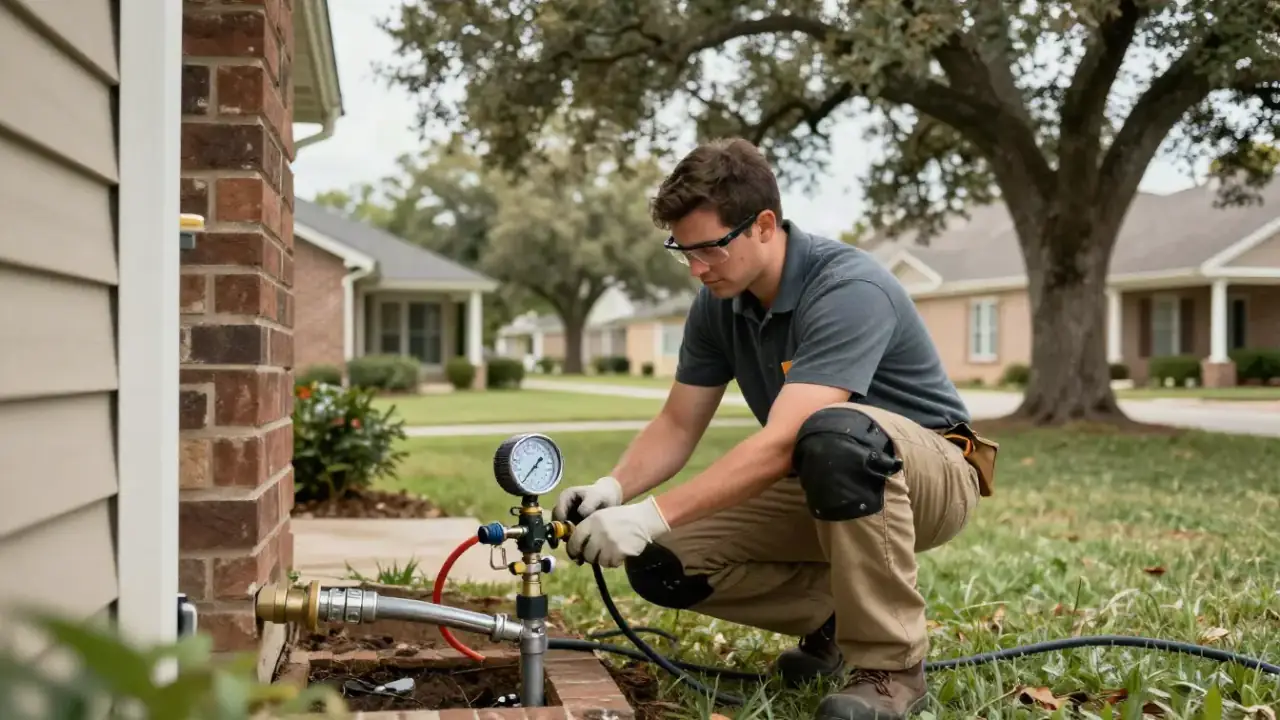
Using a pressure testing kit, we isolate the house line from the irrigation and pool loops. A 10 psi drop over 15 minutes confirms a leak on that section. This step separates a slab leak from a sprinkler leak before we touch anything.
We walk the slab and walls with a Sewerin acoustic listening stick and a Fluke thermal imaging camera. Pressurized water escaping a copper pipe makes a distinct hiss, and the thermal camera shows the temperature difference. Together they narrow the leak to a 12-to-18-inch area.
When the leak is under the house or inside a wall, we run a General Pipe Cleaners video pipe inspection camera through the line. You see the crack, the joint separation, or the root intrusion on screen. No guessing, no exploratory demolition.
We mark the location, photograph the evidence, and hand you a written finding with a flat-rate repair quote. If the fix is a $180 toilet flapper, we tell you. If it is a slab leak, you get options for trenchless repair or conventional access.
Listens for the high-frequency hiss of pressurized water escaping a pipe. We use it on slabs, walls, and underground lines to narrow the leak to a 12-to-18-inch area.
Shows temperature differences on the floor and wall surface. A hot-side slab leak reads as a warm streak, and a cold supply leak reads as a cool one, which tells us which line is failing.
Isolates sections of the plumbing and measures pressure drop over time. A 10 psi drop in 15 minutes confirms a leak on that section and rules out the rest of the system.
Runs through the pipe to show cracks, joint separations, and root intrusion on screen. We use it when the leak is under the house or inside a wall and we need visual proof.
Traces the path of underground service lines and irrigation laterals so we know exactly where to dig. It keeps the excavation footprint small and the repair targeted.
Cut clean, minimal access points in slab, drywall, and siding when a repair requires it. Smaller access means less patching and less restoration cost for you.
Reads moisture content in drywall, framing, and subfloor. We use it to confirm whether a ceiling and wall leak has already soaked the cavity and whether mold risk is present.
We shut off every fixture and appliance, then watch the meter's leak indicator. If it moves, water is escaping somewhere on your side of the meter. This 10-to-15-minute test tells us whether to investigate the supply side or the drain side first.
We valve off the house line, irrigation loop, and pool loop, then pressure-test each separately. The section that holds pressure is dry; the section that drops is where the leak lives. This keeps us from chasing the wrong pipe.
We place sensors at two points on the line and compare the sound arrival time. The math points to the leak location between them, accurate to within about a foot on most copper pipe and PEX tubing runs.
We scan the slab and walls with a Fluke thermal imaging camera and look for temperature anomalies. Hot water leaks show as warm streaks; cold leaks show as cool ones. Combined with acoustic data, this confirms the target before we cut.
After any repair, we re-pressurize the line and watch the gauge for 15 minutes. If it holds, we re-check the meter with everything off. We do not call a job done until the meter stops moving.
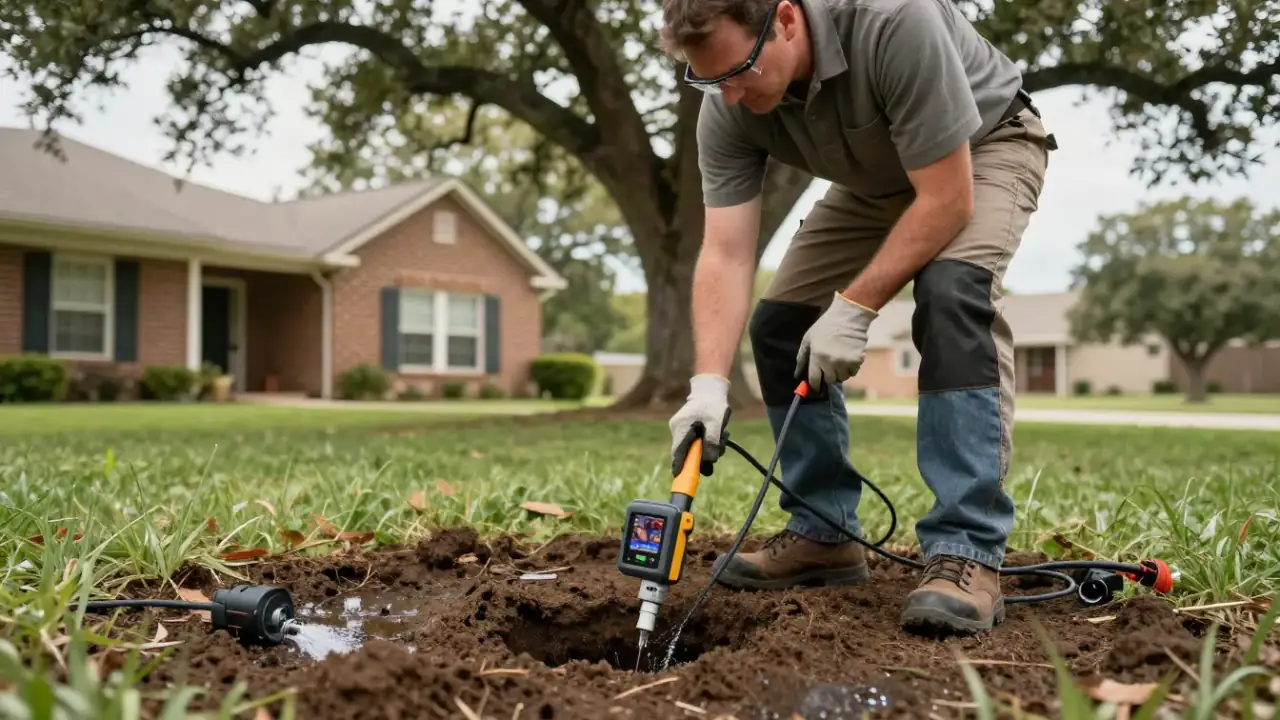
We run a full water usage audit Spring TX, starting at the meter and working through the house, irrigation, and pool loops. Acoustic and thermal scanning narrows the leak to a small area before we quote any repair. You get a written finding and a flat-rate repair quote the same day, usually within three hours of arrival.
A warm spot plus a running sound usually means a hot-side slab leak. We confirm with thermal imaging and acoustic listening, then locate the exact break with a video pipe inspection camera if needed. Targeted slab access instead of a room-wide break-out, which saves thousands in concrete and flooring restoration.
We isolate the irrigation loop from the house supply and pressure-test it separately. A stuck zone valve or a broken lateral line is the usual cause, and both are quick repairs once located. The soggy patch dries out, the zone pressure holds, and your water bill drops back to its normal range.
We work after hours, use an electronic leak detection system on the commercial line, and document the finding for your records. We check the backflow assembly, the meter vault, and the interior lines. A clean report you can hand to the tenant or insurer, plus a flat-rate repair quote for the failed component.
Spring's expansive clay soil is the biggest factor in how we investigate a water bill spike. That clay swells when it is wet and shrinks when it dries, and every cycle puts stress on the copper pipe and PEX tubing under your slab. In older pier-and-beam neighborhoods like Timberlane and Memorial Northwest, we also crawl the under-house space because rodents and shifting soil damage lines there. Our climate matters too: a mild winter still brings enough freeze nights to crack a backflow assembly or an exposed hose bib, and those failures show up on the spring bill. We follow the International Plumbing Code and Uniform Plumbing Code on every repair, and we pull permits when the scope requires it in Harris County. If you are searching for a professional water bill investigation Spring TX, we bring the same gear to a 1970s ranch in Northampton and a new build in Auburn Lakes. We test the meter, isolate the loops, and scan until we find it.
Older homes with original copper pipe and mature trees. Root intrusion into the service line is common, and we use a pipe locator before any digging.
Larger lots with long irrigation runs. A stuck zone valve here can waste thousands of gallons a week, so we always isolate the irrigation loop during the investigation.
Newer construction with PEX tubing and PVC pipe. Leaks here are often at fittings and manifolds rather than mid-pipe, and a video camera confirms the failure point.
1990s slab-on-grade homes on active clay. Slab leaks are the most common finding, and thermal imaging plus acoustic listening pinpoints them without breaking out the floor.
Pier-and-beam homes with under-house lines. We crawl the space with a moisture meter and check for rodent damage and joint separation on the copper pipe.
The movement stresses buried copper pipe and PEX tubing, causing pinhole leaks and joint failures. We see a spike in slab leak calls after a dry summer followed by heavy fall rain.
Exposed backflow assemblies, hose bibs, and irrigation lines crack when temperatures drop below freezing. Those failures often show up as a high water bill in the first billing cycle after the freeze.
A saturated water table can mask an underground pipe leak because the yard is already wet. We rely on pressure testing and acoustic correlation rather than surface moisture to find it.
Roots seek out the condensation on water service lines and can crack PVC pipe or copper pipe over time. A pipe locator and video camera help us confirm root intrusion before we dig.
A homeowner's water bill went from $68 to $215 in one cycle. The meter spun with everything off, and there was a warm spot near the hallway. Two other plumbers recommended breaking out the entire floor.
We used thermal imaging and acoustic correlation to pinpoint the hot-side slab leak within 14 inches. One targeted access cut, a new section of copper pipe, and a pressure test. The bill dropped back to $72 the next cycle.
Maintenance: We recommended a yearly meter check and keeping the irrigation off the slab edge. If the bill moves more than 15 percent in a cycle, call us before it compounds.
A homeowner's bill doubled over two months, and a soggy patch in the yard never dried. The irrigation system seemed to run fine, so the leak was blamed on the house line.
We isolated the irrigation loop and pressure-tested it separately. Zone 4 was losing 8 psi in 10 minutes. A broken lateral line was repaired the same day, and the bill returned to normal within one cycle.
Maintenance: We suggested a seasonal irrigation audit and checking zone pressure after any valve replacement. A stuck valve can waste 5,000 gallons a week before you notice.
A pier-and-beam home had a water bill that climbed $40 a month for three straight cycles. The yard stayed dry, and the under-house space looked fine from the access hatch.
We crawled the space with a moisture meter and found a slow drip on the copper service line where it entered the house. A pipe repair clamp and new fitting fixed it in under two hours. The meter stopped moving.
Maintenance: We recommended re-insulating the under-house line and checking it each fall. Rodents and soil movement are the two biggest threats to pier-and-beam plumbing in Spring.
Most high water bills in Spring trace back to one of a handful of failure points. Here is what we see most often and what happens if you leave it alone.
You keep paying for lost water every month, and the hidden leak keeps eroding soil or soaking drywall until it becomes a structural repair. We pressure-test the line, scan with acoustic and thermal gear, and pinpoint the leak. Most hidden leaks in Spring homes are found in two to three hours, and the repair is a targeted fix, not a full repipe.
A water service line leak or irrigation break saturates the clay soil, which shifts your foundation and can flood a low corner of the slab. We isolate the service line from the irrigation loop, locate the break with a pipe locator, and repair the PVC pipe or copper pipe. Trenchless repair equipment lets us fix most yard leaks with minimal digging.
That is pressurized water escaping somewhere in the system. Left alone, a slab leak can warp flooring, crack tile, and grow mold in the wall cavity. We use acoustic leak detection equipment to trace the sound to its source, then confirm with thermal imaging. Once located, we repair the line and pressure-test it before we leave.
The utility will keep billing you for every gallon. If the leak is on your side of the meter, the bill is yours, and it compounds every cycle. We confirm the meter is accurate, then isolate the house, irrigation, and pool loops one at a time. The loop that holds pressure is the dry one; the loop that drops is where we focus the investigation.
$180 - $450 for the investigation; $95 - $2,800 for the repair depending on scope
Typical 2026 pricing for a High Water Bill Investigation Spring TX runs $180 to $450 for the diagnostic, depending on how many loops we have to isolate and whether we need video camera confirmation. The repair is quoted separately at a flat rate once we know what we are fixing. A simple flapper replacement might be $95; a slab leak repair with targeted access runs $1,200 to $2,800. We give you the diagnostic finding and the repair quote before any work begins.
The diagnostic pays for itself the first billing cycle after we find the leak. A hidden leak wasting 3,000 gallons a month costs more than the investigation in most Spring water districts, and it keeps costing until someone finds it.
A house with only a domestic line is faster to test than one with irrigation, pool, and a separate shop or guest house. Each additional loop adds 20 to 30 minutes of pressure testing and isolation work.
A slab-on-grade home requires acoustic and thermal scanning across the floor. A pier-and-beam home requires a crawl, which takes longer but often makes the repair access easier once the leak is found.
If the leak is inside a wall or under the house, we run a video camera to see the failure. That adds $75 to $150 to the diagnostic but prevents exploratory demolition that can cost ten times as much.
A copper pipe repair with solder and fittings is different from a PEX tubing repair with crimp rings. Trenchless repair equipment can reduce yard excavation, but it is not right for every line.
A standard weekday appointment is the base rate. Nights, weekends, and commercial after-hours work carry a higher call-out, typically 25 to 40 percent more than the daytime diagnostic.
Our technicians hold Texas State Board of Plumbing Examiners (TSBPE) credentials and work under a Master Plumber License. We carry Backflow Prevention Assembly Tester certification and follow both the International Plumbing Code and Uniform Plumbing Code on every repair. Our trucks stock RIDGID locators, Milwaukee inspection cameras, and DeWalt coring tools so we are not waiting on a supply house mid-job. We have worked Spring slabs, pier-and-beam under-house lines, and commercial meter vaults across Harris County.
My bill jumped from $70 to $240 in one cycle. Spring Leak Detection tested the meter, isolated the irrigation, and found a slab leak under the hallway with the thermal camera. They marked it, quoted a flat rate, and repaired it the next morning. Two bills later I am back to normal.
I had two other plumbers tell me to break up the floor. These guys ran a camera and found the leak was actually on the service line in the yard, not the slab. Saved me thousands in concrete work. The repair took half a day and the meter stopped spinning.
We had a commercial suite with a mystery water bill spike. They came out after hours, used an electronic leak detection system, and traced it to a failed backflow assembly. Clean report, flat-rate repair, and our tenant's bill dropped the next cycle.
The most common causes are a running toilet flapper, a slab leak, or an irrigation zone stuck open. A flapper can waste 200 gallons a day, and a slab leak at 60 psi can lose 3,000 to 6,000 gallons a month. We test the meter with everything off, then isolate the house, irrigation, and pool loops to find which one is losing water.
We start at the meter and confirm water is moving with every fixture off. Then we pressure-isolate the house line from irrigation and pool loops, scan with acoustic and thermal equipment, and verify with a video camera when needed. Most Spring homes are diagnosed in two to three hours, and you get a written finding the same day.
Yes. A hidden pipe leak the size of a pencil lead loses about 2 to 10 gallons an hour, which is 1,400 to 7,200 gallons a month. That is enough to double a typical Spring water bill. Underground pipe leaks, slab leaks, and under-house leaks are the usual culprits, and they do not always show a wet spot.
Call a licensed leak detection plumber, not a general handyman. We carry acoustic leak detection equipment, thermal imaging cameras, and pressure testing kits, and we work under a Master Plumber License through the Texas State Board of Plumbing Examiners. Call (281) 248-8538 and we will get you on the schedule.
Not seeing your question? Our local team can help you understand urgency, scheduling and what to expect.
Ask the local team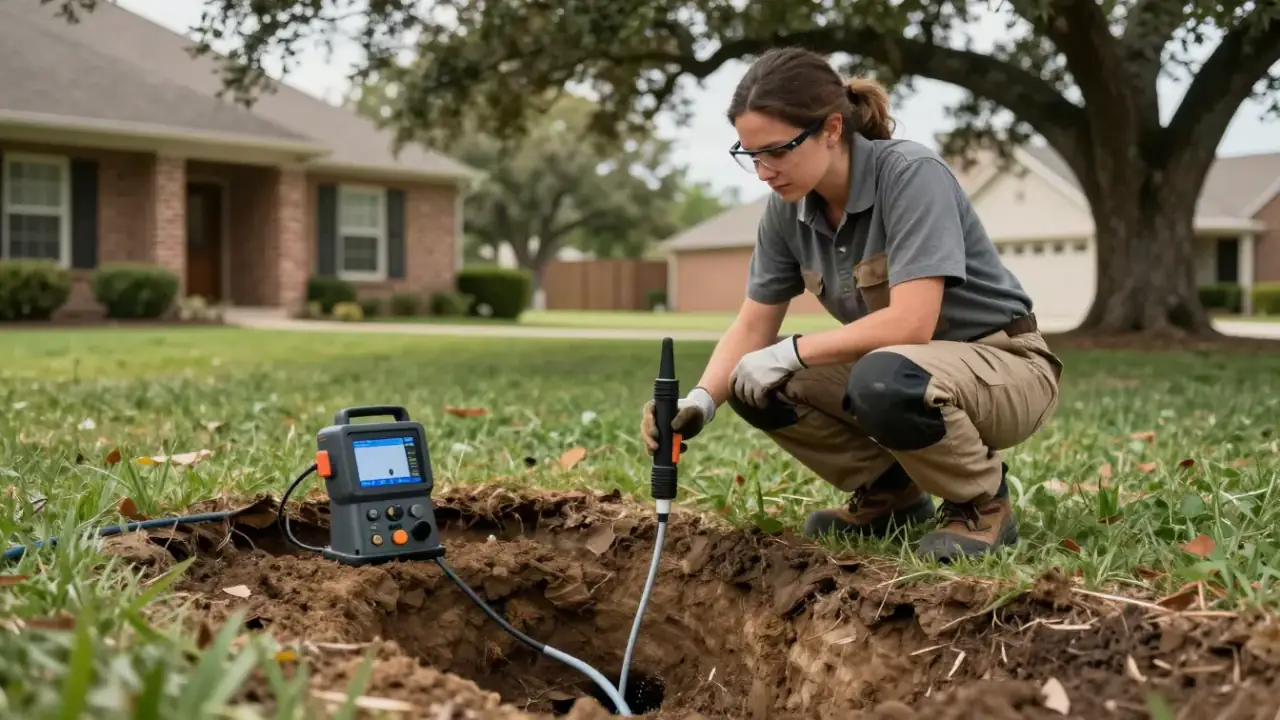
When your High Water Bill Investigation Spring TX points to a slab leak, we repair the copper or PEX line under the concrete. We pinpoint first with acoustic and thermal gear, then make a targeted access cut instead of breaking out the whole room.
View service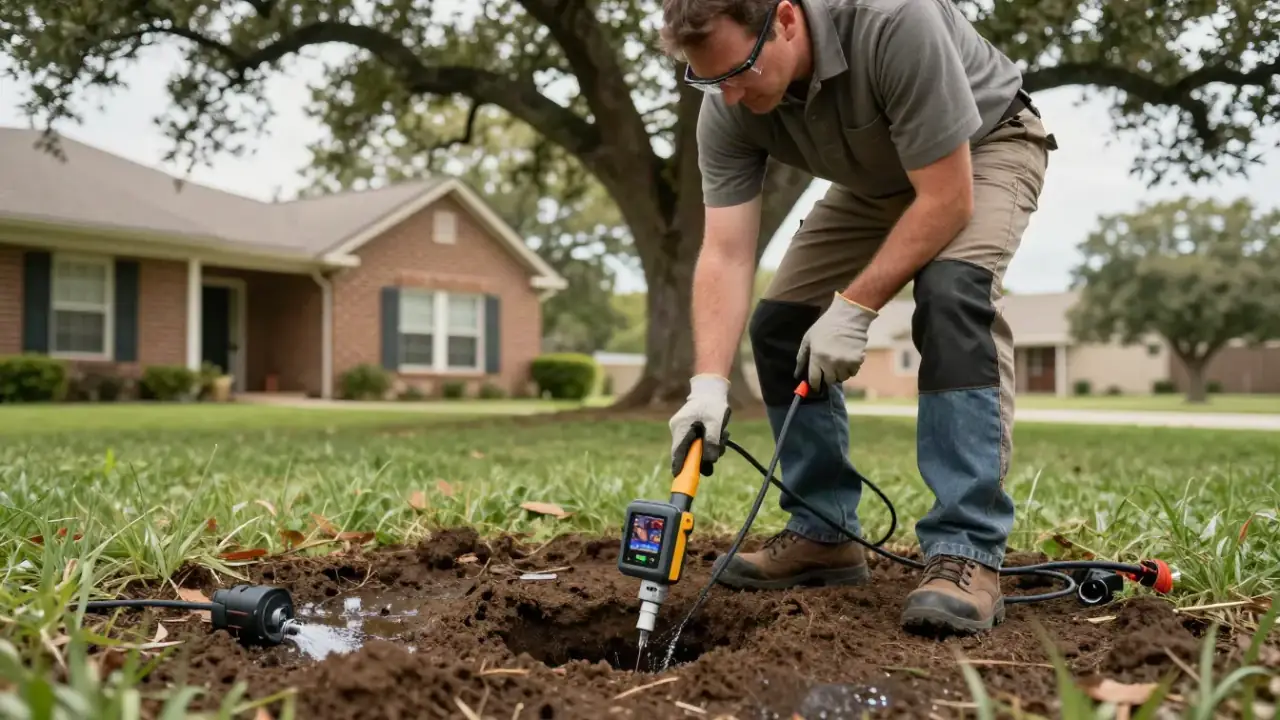
The meter is where every investigation starts. We confirm whether the leak indicator is spinning, test the meter's accuracy, and isolate the supply side from the house side so you know whether the loss is yours or the utility's.
View service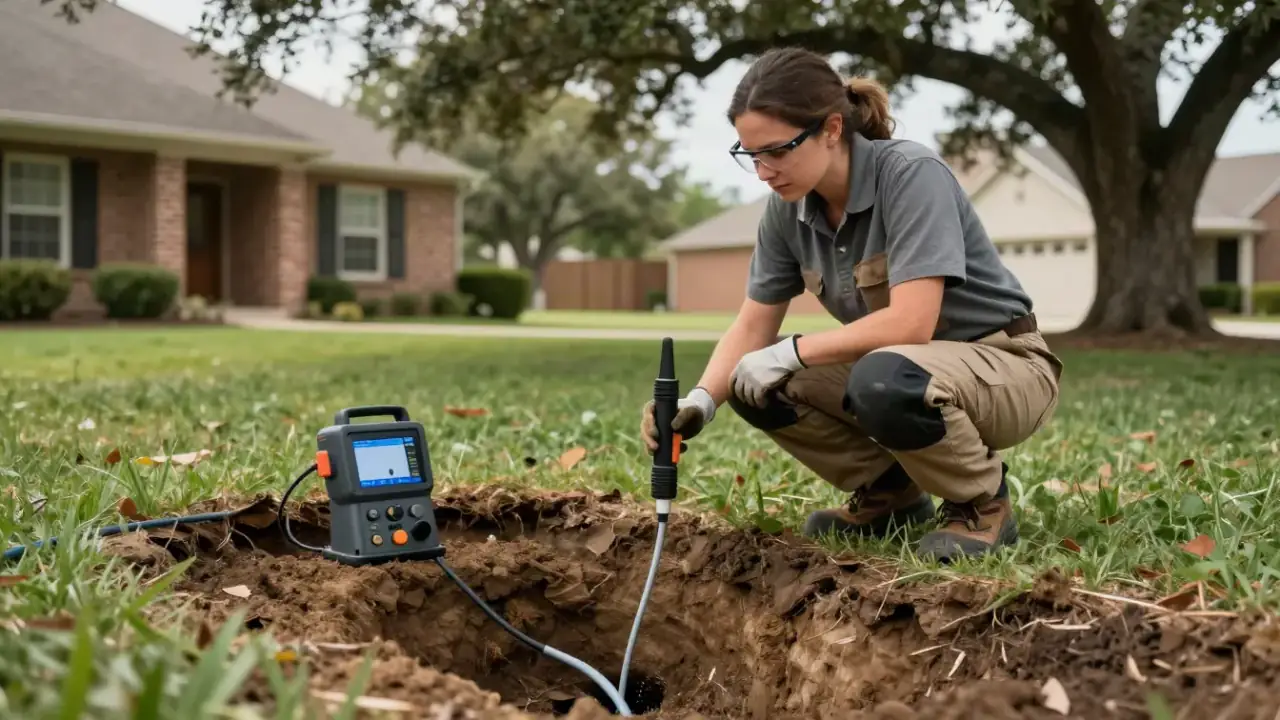
A water service line leak between the meter and the house drives up bills and can undermine the yard. We locate it with a pipe locator, then repair or replace the run with trenchless repair equipment where the soil allows.
View service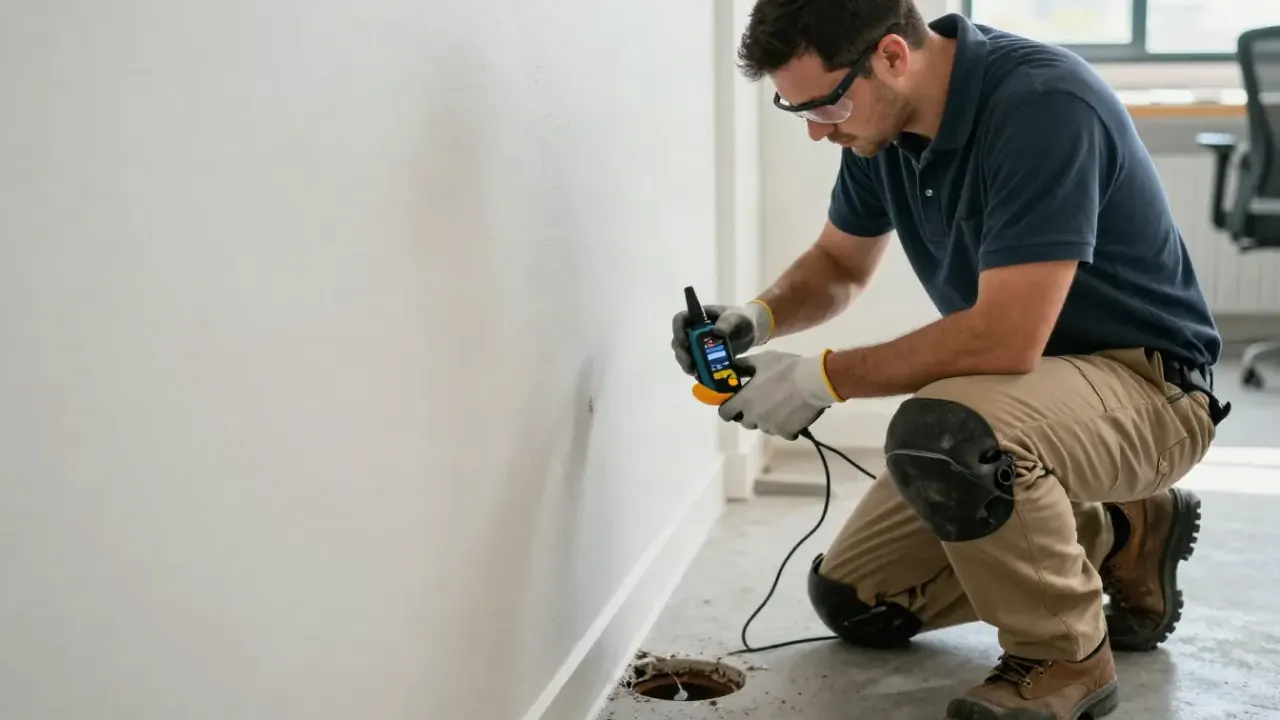
Restaurants, offices, and retail in Spring lose money on every hour of undetected water loss. We work after hours, locate the leak with electronic leak detection systems, and document the finding for your property manager or insurer.
View service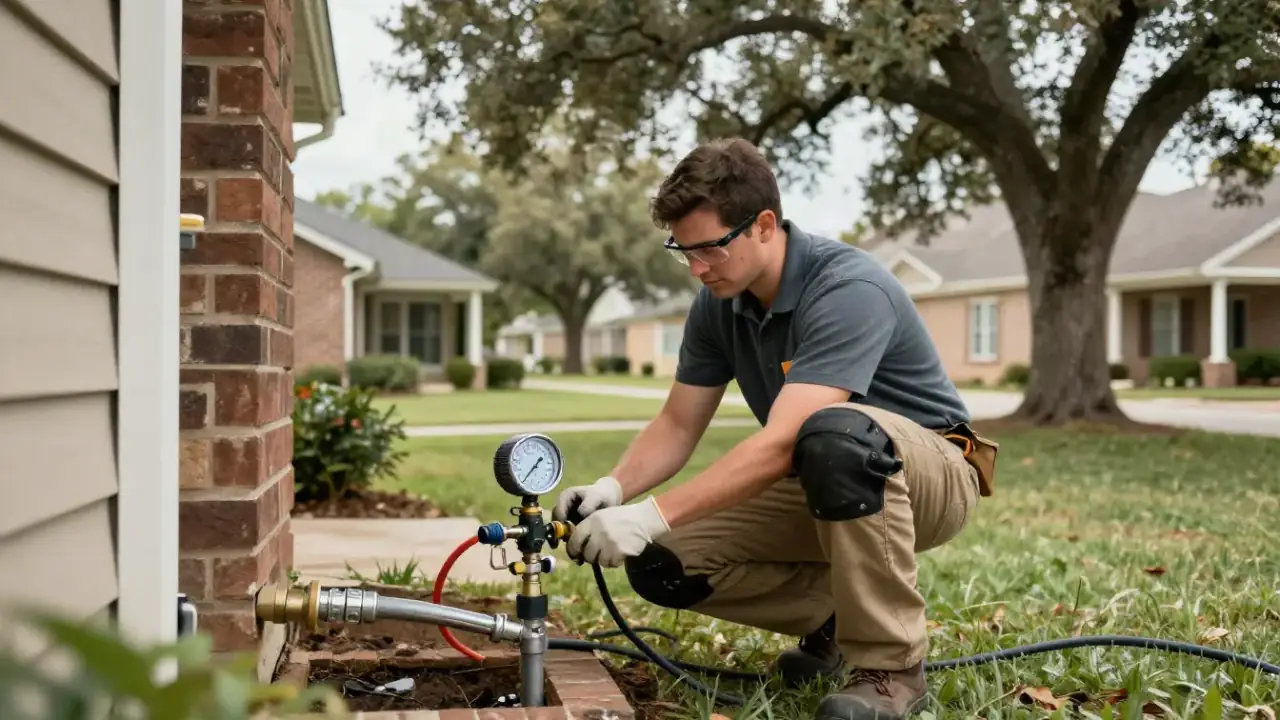
Call (281) 248-8538 and we will get a licensed tech scheduled, usually the same day. We answer the phone 24/7 for active leaks, and we cover Spring, Harris County, and the surrounding communities. Tell us what you are seeing and we will bring the right gear.