Focused arrival windows
Useful updates and clear arrival timing.
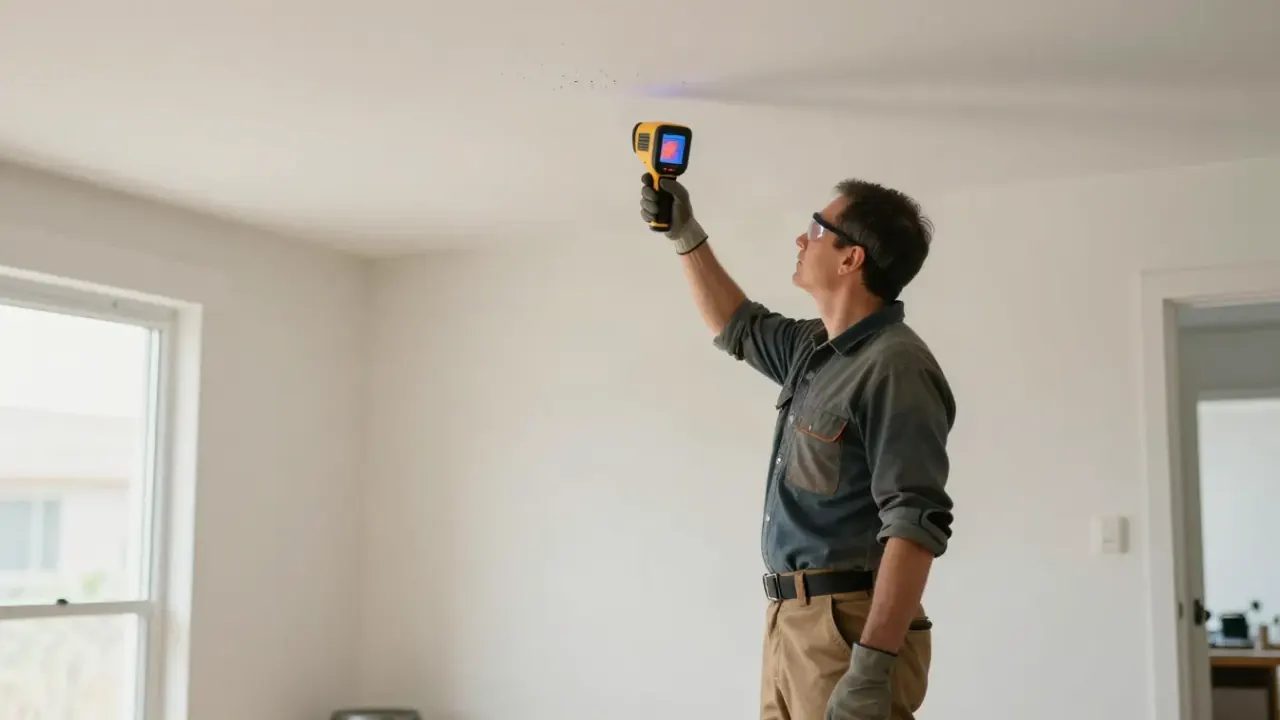
Leak Detection in Houston means finding the exact source of a water leak before any concrete gets broken or drywall gets cut. Our licensed technicians use acoustic listening gear, thermal imaging and pressure testing to pinpoint slab leaks, water service line leaks and under-house leaks across Downtown, The Heights, Montrose and River Oaks. We show up when we say we will, quote the repair upfront, and fix it the same day whenever the schedule allows.
Useful updates and clear arrival timing.
Review the approach and price before deciding.
Equipped vehicles and respectful cleanup.
Neighbors serving neighbors with follow-through.
Leak Detection in Houston is a trade of its own. This city sits on expansive clay soil that swells after every heavy rain and shrinks hard in the summer drought, and that constant movement is brutal on the copper pipe and PEX tubing running under slab-on-grade homes. Add a high water table in many areas and a housing stock that ranges from 1920s bungalows in The Heights to new builds in Katy, and you get leak patterns you will not see in most Texas cities. We run acoustic leak detection equipment, thermal imaging cameras and pressure testing kits to find the leak without tearing your house apart. From a pinhole slab leak in Montrose to a failed water service line in Spring Branch, our licensed plumbers work to the International Plumbing Code and the Uniform Plumbing Code, and we test every line before we leave. If your water bill jumped and nothing in the house changed, that is exactly the call we take.
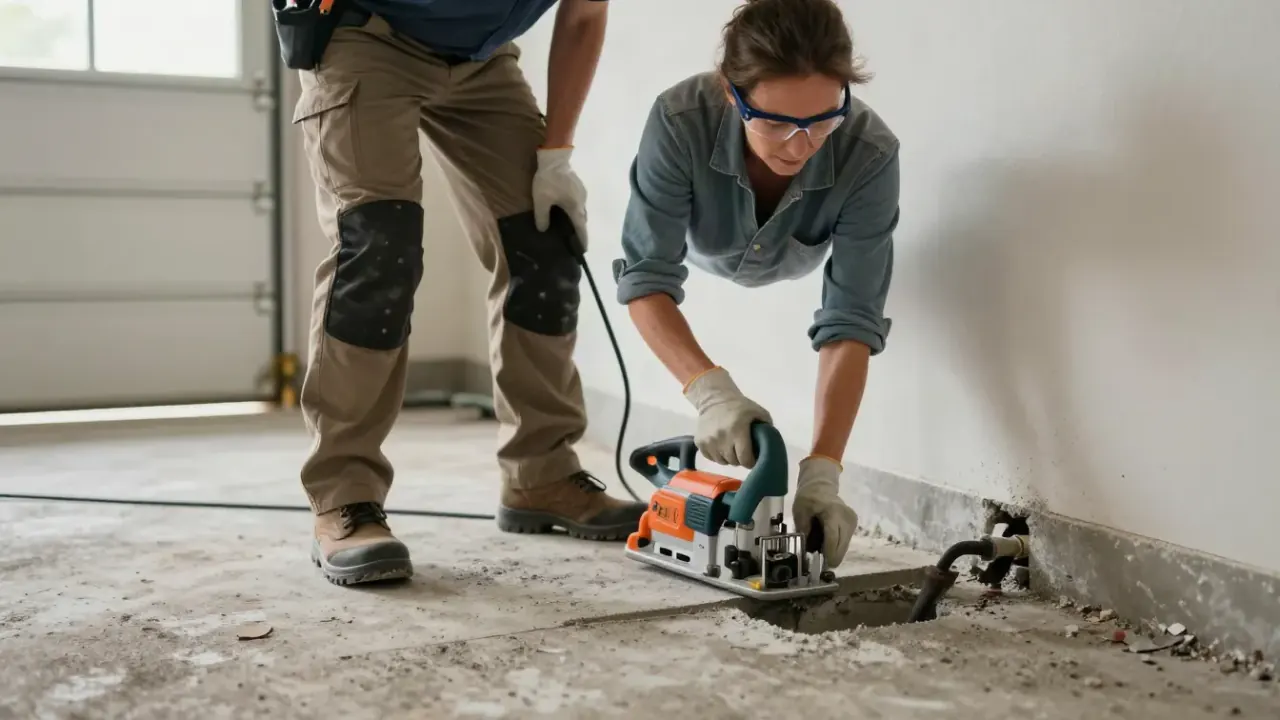
Every Houston service we offer starts with the same step: find the leak, prove it, then fix it. If you have been searching for water leak detection Houston near me and getting nothing but guesses, that changes here. We bring electronic leak detection systems, pipe locators and video pipe inspection cameras to the job, so the repair is targeted instead of exploratory. Whether it is a slab leak in River Oaks or an irrigation break in Katy, the process is the same and the results are documented.
Houston slab leaks are common because of clay soil foundation shifts, and they rarely announce themselves loudly. We use acoustic listening equipment and thermal imaging to isolate the break under the slab, then repair it with the least concrete removal possible. Homes in Montrose, The Heights and River Oaks are our most frequent slab leak calls. We pressure test the line after the repair and leave you with a dry floor and a meter that stops spinning.
View service →02A Houston water bill that jumps $80 to $300 with no change in habits usually means a hidden pipe leak. We start at the meter, isolate the house from the irrigation system, and run a pressure test to confirm whether the loss is inside or outside. Then we locate it with acoustic gear. This is the fastest way to stop paying for water you never used, and we do it across 77002, 77006 and 77008 regularly.
View service →03If your meter dial keeps ticking with every fixture off, you have a leak somewhere on the property. We diagnose water meter leaks by shutting down zones one at a time and watching the meter, then confirming with pressure testing. Houston homes with long service runs from the meter to the house are the usual suspects. We tell you exactly which side of the meter the loss is on before any digging starts.
View service →04The water service line from the city main to your house takes the full force of Houston soil movement. When it fails, you get wet spots in the yard, a dropping meter reading or low pressure inside. We locate the break with a pipe locator, expose only the damaged section, and repair or replace it to code. Trenchless repair equipment keeps most of your landscaping intact in Spring Branch and Katy yards.
View service →05Commercial buildings in Downtown Houston and the Museum District cannot afford a shutdown while someone guesses at a leak. We locate leaks in domestic water lines, fire lines and mechanical rooms using acoustic and thermal tools, working around your tenants and operating hours. Restaurants, medical offices and retail spaces get a written location report and a repair plan. We coordinate with your building engineer so the fix happens on your schedule.
View service →06A brown ring on the ceiling or a soft spot in the drywall means water is traveling from somewhere else. In Houston two-story homes, the source is often a supply line in the attic or a drain joint behind a wall. We use moisture meters and thermal imaging to trace the path before opening anything. Then we repair the pipe and dry the cavity. Catching it early prevents mold from hidden leaks, which is a real problem in Houston humidity.
View service →07Underground pipe leaks in Houston show up as soggy patches, unusually green grass or a meter that never stops. Clay soil pipe damage is the leading cause, especially on older copper and PVC pipe runs. We locate the leak with electronic detection, dig a targeted hole instead of a trench, and repair the line with code-approved fittings. Yards in The Heights and Spring Branch come back to normal fast.
View service →08Houston irrigation systems run most of the year, so sprinkler leaks waste water quietly and inflate your bill. A stuck zone valve or a cracked lateral line can lose hundreds of gallons a week. We isolate the irrigation loop from the house, pressure test it, and locate the break with acoustic gear. Repairs use PVC pipe, CPVC pipe and standard pipe fittings. We also check the backflow assembly while we are there.
View service →09A Houston pool that needs topping off every few days has a leak, not evaporation. We pressure test the plumbing loop, check the skimmer and light niches, and use dye testing to find the breach. Pool and spa leaks in Katy and River Oaks often trace back to underground return lines or failing fittings. We locate it, repair it, and confirm the system holds pressure before we call it done.
View service →Houston jobs require a different playbook than most Texas cities. Slab-on-grade construction is everywhere, the clay soil moves hard between wet and dry seasons, and a lot of neighborhoods have irrigation running almost year-round. When you call for emergency Leak Detection Houston TX, we start by shutting the main and watching the meter to confirm an active loss. Then we isolate the irrigation loop, the pool loop and the house separately. That step alone saves hours. From there we use acoustic leak detection equipment on the slab and thermal imaging camera work on walls and ceilings. If the line is under the yard, a pipe locator tells us exactly where to dig. We work to the International Plumbing Code and Uniform Plumbing Code, and our plumbers hold TSBPE licenses. Access matters here too. Downtown high-rises and Museum District buildings need coordination with building engineers, and tight River Oaks lots mean we park on the street and keep the work area clean. Most residential leak locations take two to four hours. Repairs are quoted upfront, and we test the line before we leave.
Houston's expansive clay swells after rain and shrinks in drought, which flexes buried copper pipe and PEX tubing until joints fail. That is why slab leaks and water service line leaks are so common here, and why a leak can appear months after a dry summer. We pressure test the full line, not just the visible section, so we catch the second weak joint before it fails. Repairs use flexible couplings and materials rated for movement, and we document the line pressure after the fix.
In low-lying parts of Houston, groundwater sits close to the surface. A yard leak and a high water table look identical, so homeowners waste time guessing. The meter is the only honest witness. We isolate zones at the meter and run controlled pressure tests to separate groundwater from an active pipe loss. Acoustic gear then confirms the exact break location before we dig.
The Heights and Montrose have homes where galvanized steel, copper pipe and newer PEX tubing meet at adapters. Those transition points are where leaks start, and they are often buried behind walls or under slabs. We use video pipe inspection cameras to see inside the line and identify material transitions. Repairs match the existing material and use proper dielectric fittings so the new joint does not corrode.
Any leak repair on potable water lines in Houston must be done by a licensed plumber. We hold Master Plumber and Journeyman Plumber licenses, so the work is legal, insurable and passes inspection.
These codes govern pipe materials, joint methods and pressure testing in Houston. We follow them on every repair, which matters when you sell the house or file an insurance claim.
Houston irrigation systems require backflow protection. When we repair a sprinkler leak, we check the assembly and can test it if needed, keeping your system compliant with city requirements.
Houston has a specific set of conditions that produce leaks: expansive clay soil, a high water table in many areas, older homes with aging plumbing, and irrigation systems that run most of the year. Those factors drive the same four problems over and over, and we know how to handle each one.
Houston's clay soil swells when it rains and shrinks in the summer drought. That movement flexes the copper pipe and PEX tubing under slab-on-grade homes until a joint or a pipe wall fails. It is the single most common leak we see in this city. We confirm the leak with a meter test, then use acoustic leak detection equipment and thermal imaging to pinpoint the break. Repairs are targeted, not exploratory, so we open the smallest section of slab possible and pressure test the line afterward.
The service line from the city main to your house takes the full force of soil movement. Older copper and galvanized lines in The Heights and Montrose are especially prone. A break here shows up as a wet yard and a meter that never stops. We isolate the house from the yard at the meter, then use a pipe locator to trace the line. We expose only the damaged section and repair it with code-approved materials. Trenchless repair equipment keeps most of your landscaping intact.
Houston irrigation systems run almost year-round, which wears out valves, lateral lines and fittings fast. A cracked PVC pipe or a stuck zone valve can lose hundreds of gallons a week without a visible puddle, because the water soaks straight into the clay. We pressure test the irrigation loop separately from the house, locate the break with acoustic gear, and repair it with PVC pipe and standard fittings. We also check the backflow assembly while we are on site.
Older Houston homes have copper pipe with decades of wear, plus transition fittings where new PEX meets old metal. Those joints fail quietly inside walls and attics. By the time you see a stain, the leak has been running for weeks. We use moisture meters and a thermal imaging camera to trace the leak path before opening the wall. Then we repair the pipe, dry the cavity, and check the surrounding framing for rot or mold so the fix is complete, not cosmetic.
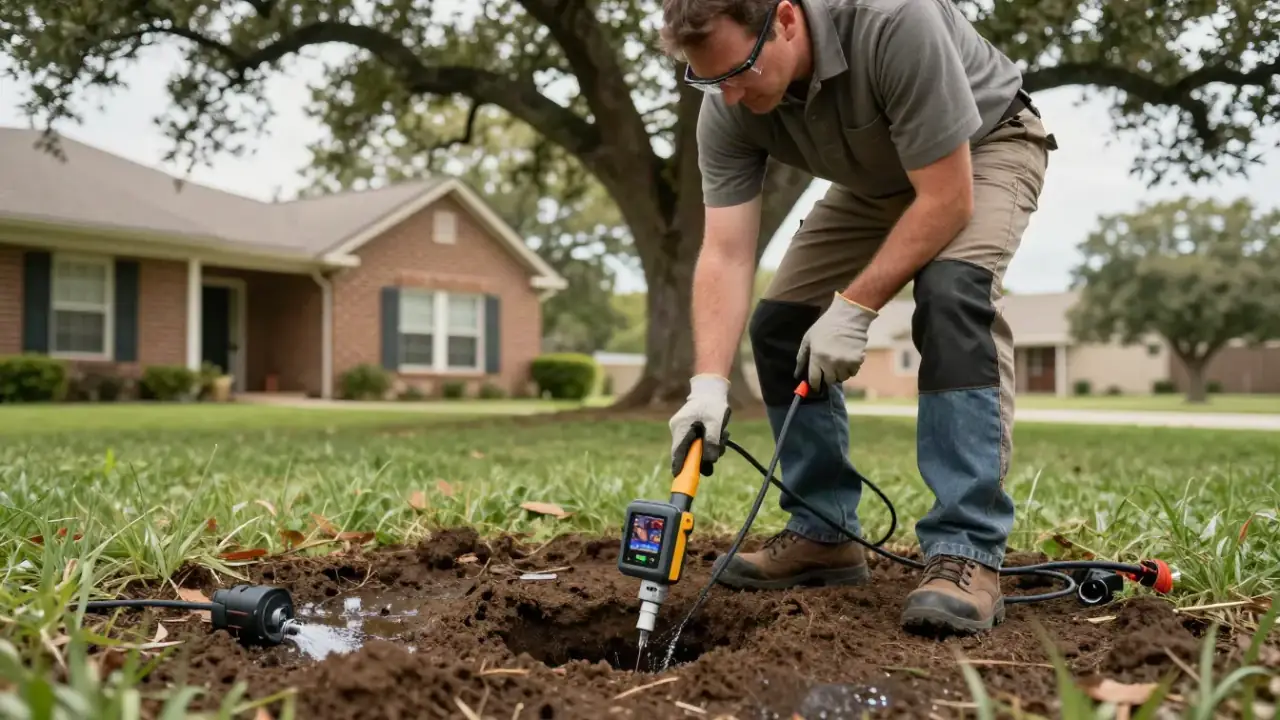
Typical 2026 pricing for leak detection in Houston runs $180 to $450 for the location visit, depending on how many systems we have to isolate and how deep the leak is hiding. A straightforward slab leak location on a single-story home sits at the lower end. Jobs that involve separating the pool loop, the irrigation loop and the house, or tracing a leak through a two-story wall cavity, take longer and cost more. Repairs are quoted separately and upfront, and the location fee is credited toward the repair when you hire us for the fix. If you have been searching for affordable Leak Detection in Houston, ask for the flat-rate quote before we start. We tell you the number, you decide.
Homes with irrigation, pool plumbing and long service runs take more time to separate at the meter. Each loop we isolate adds 20 to 40 minutes, and that shows up in the price. A simple house-only leak is the cheapest scenario.
Slab-on-grade homes in Houston vary in thickness and finish. Tile, hardwood and post-tension slabs change how we open the floor. Post-tension slabs require extra care and sometimes a different repair approach, which affects both the location and the repair cost.
After-hours and weekend calls carry a higher rate because we pull a crew off the schedule. If the leak is not flooding your house, a weekday appointment is the most affordable option. We quote the emergency rate before we dispatch.
Houston is big, and the fastest route is not always the obvious one. We use landmarks as orientation points to route around traffic and find the right entrance to a property. If you are near Space Center Houston or the Houston Zoo, we know which side of the street you are on and how to reach you without circling.
A clear orientation point on the southeast side near I-45 and NASA Parkway. It helps us route calls in the Clear Lake and southeast Houston corridor without getting caught in the freeway interchange.
Sits in Hermann Park next to the Museum District. We use it to orient calls around Fannin, Main and the surrounding medical and museum area, where parking and access need planning.
A major reference point off Loop 610 South and Kirby Drive. On event days we route around the stadium traffic to reach homes and businesses in the surrounding neighborhoods.
Runs along the bayou through Downtown and Montrose. It helps us separate north-side and south-side addresses and pick the right bridge crossing when the bayou splits the route.
The central business district has high-rise offices, hotels and restaurants with complex domestic water and fire line systems. Leak location here needs coordination with building engineers and after-hours scheduling so tenants are not disrupted.
A dense mix of museums, medical offices and older commercial buildings along Fannin and Main. Many structures have original pipe runs, so leak location often means working around occupied spaces and sensitive interiors.
Our main corridor from Spring into Downtown Houston. It sets our response time for The Heights, Montrose and the central business district.
The route we use for Katy, Spring Branch and the west side. We watch the Katy Freeway traffic closely when scheduling morning calls.
Our trucks run Houston daily, from Downtown to Katy. These are the areas we know street by street, including how the homes are built, where the shutoffs are, and what kind of leak each neighborhood tends to produce.
The Heights mixes pier-and-beam bungalows with newer slab homes, and both produce leaks. Crawl space plumbing on the older houses drips out of sight, while the slab homes deal with clay soil movement. We work 77008 often and know the older shutoff layouts. About 25 to 35 minutes from our Spring base via I-45 and I-10, depending on traffic.
Montrose has a dense mix of 1920s homes, renovated duplexes and small commercial buildings. Aging copper pipe and shared walls make hidden leaks tricky. We locate the source with acoustic gear before opening anything, which matters when the walls are original plaster. Roughly 30 to 40 minutes down I-45 and Allen Parkway, and we schedule around Museum District events.
River Oaks homes are large, often with long water service runs, irrigation systems and pool plumbing. A leak can be in any of those loops, and the landscaping makes digging expensive. We isolate each loop at the meter first so we dig once, in the right spot. About 30 to 40 minutes via I-45 and I-10, with street parking on the tighter lots.
Katy is newer construction with PEX tubing, slab foundations and irrigation running most of the year. The most common calls are sprinkler leaks, slab leaks from soil movement, and water service line failures near the meter. ZIP 77024 and the surrounding area keep us busy. About 40 to 50 minutes west on I-10, and we batch Katy calls to keep response times tight.
These are real job patterns we see in Houston. The details change, but the process does not: confirm the loss, locate it, repair it, test it. Here is how that plays out in three common scenarios.
A homeowner in The Heights saw the water bill jump from $90 to $260 in one cycle, with no visible leak inside the house. We shut the main and watched the meter, which kept spinning. After isolating the irrigation loop, the loss stayed on the house side. Acoustic leak detection equipment pinpointed a slab leak under the hallway. We repaired the copper line with a targeted access point instead of a full trench. The repair was done in one day, the line held 80 PSI on the pressure test, and the next bill dropped back to the normal range.
A River Oaks property manager had a soggy patch in the yard that kept growing, plus a meter that never stopped ticking. We isolated the pool loop, the irrigation loop and the house separately. The pool loop held pressure, the house held pressure, and the irrigation zone dropped. A pipe locator traced the break to a cracked lateral line under the lawn. We repaired it with PVC pipe and standard fittings and tested the backflow assembly. Water loss stopped within 24 hours, the yard dried out over the following week, and the irrigation system passed a full pressure test.
A Katy homeowner noticed warm spots on the floor and a faint sound of running water at night, with no fixture on. Thermal imaging camera work confirmed a hot water slab leak under the kitchen. We used acoustic gear to narrow the exact break point, opened a small section of slab, and repaired the copper pipe. The line was pressure tested before the concrete was patched. The warm spot disappeared, the meter stopped spinning, and the repair was completed in a single visit with minimal flooring removal.
Our water bill doubled and we had no idea why. The tech showed up in Montrose, shut the main, and had the leak isolated in about 20 minutes. Turned out to be a slab leak under the living room. He explained the repair, quoted it upfront, and had it fixed the same day. No guesswork, no surprise charges.
We called about a wet spot in the yard in Katy. They isolated the irrigation from the house first, which saved us from digging up the wrong spot. Found a cracked lateral line, repaired it with PVC, and tested the whole system. Bill went back to normal the next cycle. Straightforward and fast.
Had a ceiling stain in our Heights bungalow and was worried about mold. The tech used a moisture meter and thermal camera to trace it back to a supply line in the wall. Repaired the pipe, dried the cavity, and checked the crawl space while he was under there. Professional and clean work.
Houston weather drives leak patterns all year. The soil moves, the irrigation runs, and the temperature swings are mild but not harmless. If you have been putting off water leak detection Houston near me because the leak seemed small, the season you are in tells you how urgent it really is.
Spring rains soak the clay soil and it swells hard. That movement is when slab leaks and underground pipe leaks first show up, often as a wet patch or a jumping water bill. It is the busiest season for leak calls in Houston.
The drought shrinks the clay and pulls it away from foundations, which flexes buried lines. Irrigation systems run daily, so sprinkler leaks waste the most water now. High water bills in July and August are usually one of these two problems.
Temperatures drop and the soil starts to move again as rain returns. Leaks that started in summer often get worse now. This is also when homeowners notice ceiling stains from attic lines that ran all summer.
Houston freezes are short but sharp. Exposed pipes in attics, garages and crawl spaces can freeze and split, then leak when they thaw. Even a mild freeze can crack a backflow assembly or an irrigation line.
Houston is the center of a service region that stretches from Spring and The Woodlands down to Humble and Conroe. We run the same licensed leak detection crews across all of it, so you get the same tools and the same upfront pricing whether you are inside the Loop or out in the suburbs.
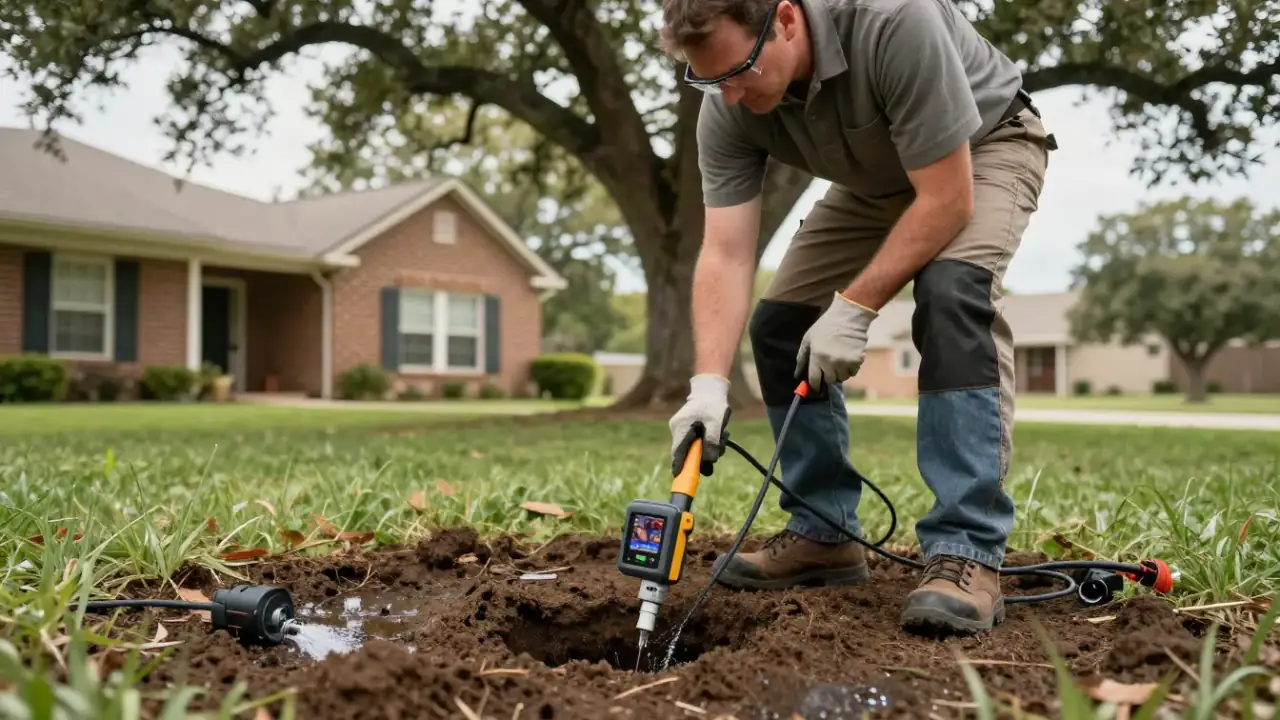
Our home base, about 25 minutes north of Downtown Houston. Many Houston customers first found us through neighbors in Old Town Spring.
Local coverage and details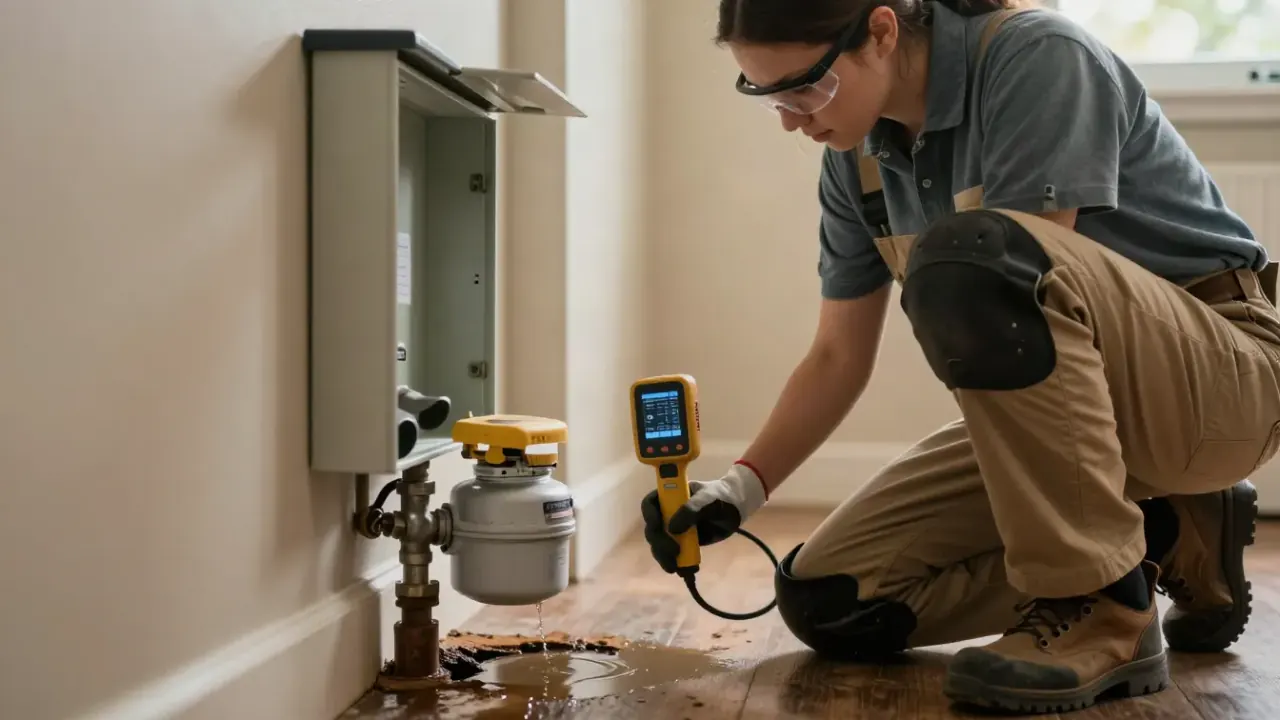
About 35 minutes northwest of Houston via the Grand Parkway. We cover Gleannloch Farms on the same routes as our Katy and Spring Branch calls.
Local coverage and details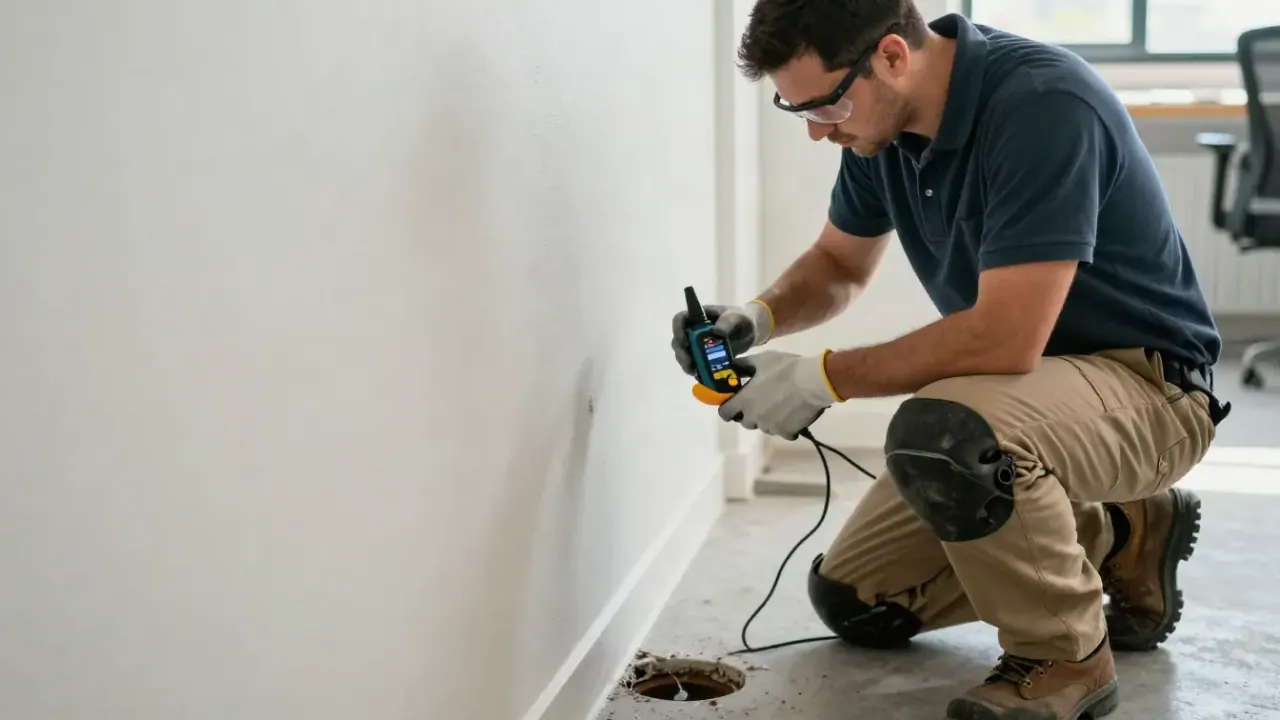
Roughly 30 minutes north of Houston off FM 1960. Champion Forest customers often call us for slab and irrigation leaks after heavy rain.
Local coverage and details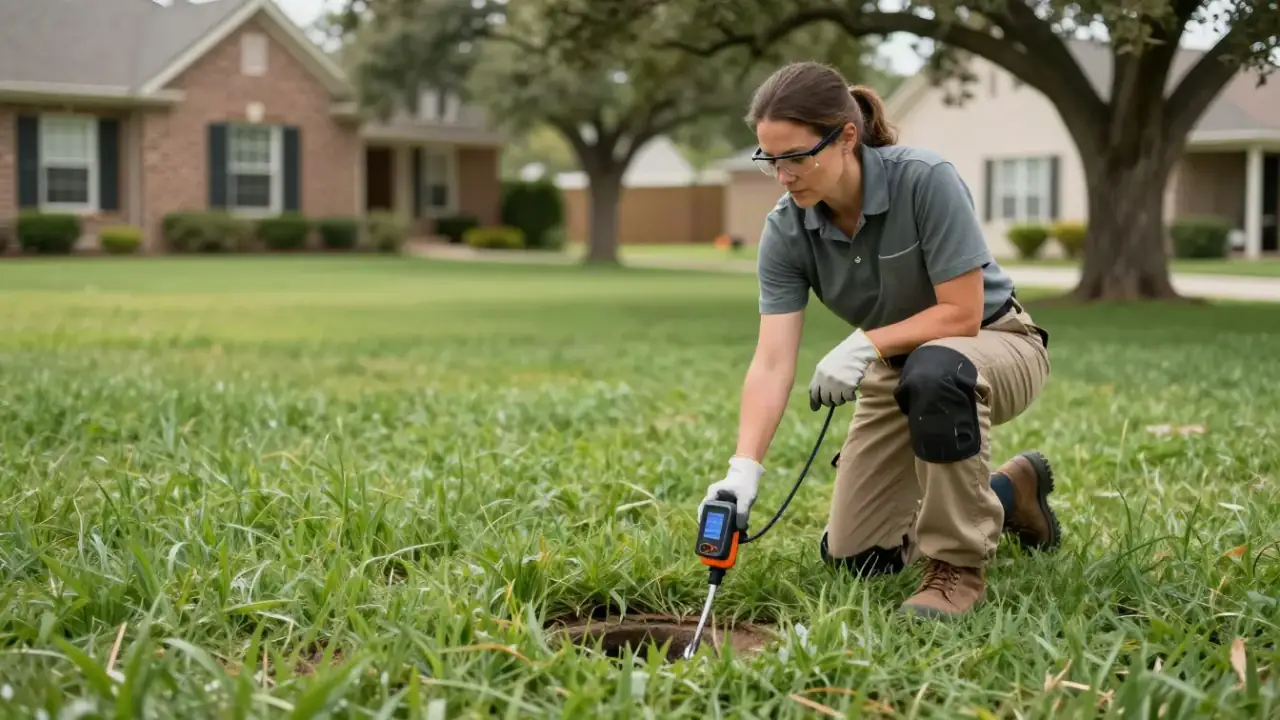
About 35 minutes northwest of Houston near the Grand Parkway. We serve Augusta Pines on the same schedule as our Spring and Tomball routes.
Local coverage and detailsHouston has plenty of plumbers, but not all of them do leak detection well. The difference shows up in the questions they ask you and the tools they bring. Here is what to ask before you let anyone start opening walls or breaking concrete.
Leak repair on potable water lines in Texas requires a TSBPE license. Ask for the license type, not just a company name. An unlicensed repair can fail inspection and cause problems when you sell the house.
A real leak detection company brings acoustic listening gear, thermal imaging and pressure testing equipment. If the answer is just a hammer and a guess, keep calling. The tools are what keep your slab and walls intact.
In Houston, a huge share of leaks are in irrigation or pool plumbing, not the house. A pro who isolates those loops at the meter saves you from paying for a slab repair you did not need.
Many Houston companies charge for the leak location and then charge again for the repair. Ask upfront. We credit the location fee when you hire us to fix the leak, so you are not paying twice for the same visit.
A repair is not done until the line holds pressure. Ask what pressure they test to and whether you get the result in writing. That test is your proof the leak is actually fixed, not just covered up.
Texas Commission on Environmental Quality
Occupational Safety and Health Administration
$2M general liability plus workers compensation
Member
Member
Most Houston leak detection visits run $180 to $450 in 2026, depending on how many systems we isolate and how hard the leak is to reach. Slab leaks on a single-story home sit at the lower end. Jobs that involve pool plumbing, irrigation loops or two-story wall cavities cost more. We quote the flat rate before we start, and the location fee is credited toward the repair when you hire us.
The best leak detection company in Houston TX is the one that finds the leak on the first visit and proves it with a pressure test. Ask any company what tools they bring and whether they isolate irrigation and pool loops before opening a slab. We use acoustic leak detection equipment, thermal imaging and pressure testing on every job, and we are licensed by the Texas State Board of Plumbing Examiners.
Yes. We run 24/7 Leak Detection in Houston, including nights, weekends and holidays. After-hours calls reach a live dispatcher, not a voicemail. If you have an active leak flooding a floor or a meter that will not stop spinning, call (281) 248-8538 and tell us that first so we prioritize the dispatch. Same-day appointments are usually available for calls before noon.
Start by checking the license. Any leak detection service near Houston should hold a TSBPE Master Plumber or Journeyman Plumber license, and they should tell you which tools they use before they arrive. Ask whether they isolate irrigation and pool loops at the meter, and whether the location fee is credited toward the repair. Those three answers separate a real leak detection company from a general plumber.
Yes, that is the whole point of leak detection. We use acoustic listening equipment to hear the leak through concrete, a thermal imaging camera to spot temperature changes behind walls, and pressure testing to confirm the loss. Once we know the exact spot, we open the smallest access point needed for the repair. Most Houston slab repairs need a section of floor opened, not a full trench.
Not seeing your question? Our local team can help you understand urgency, scheduling and what to expect.
Ask the local team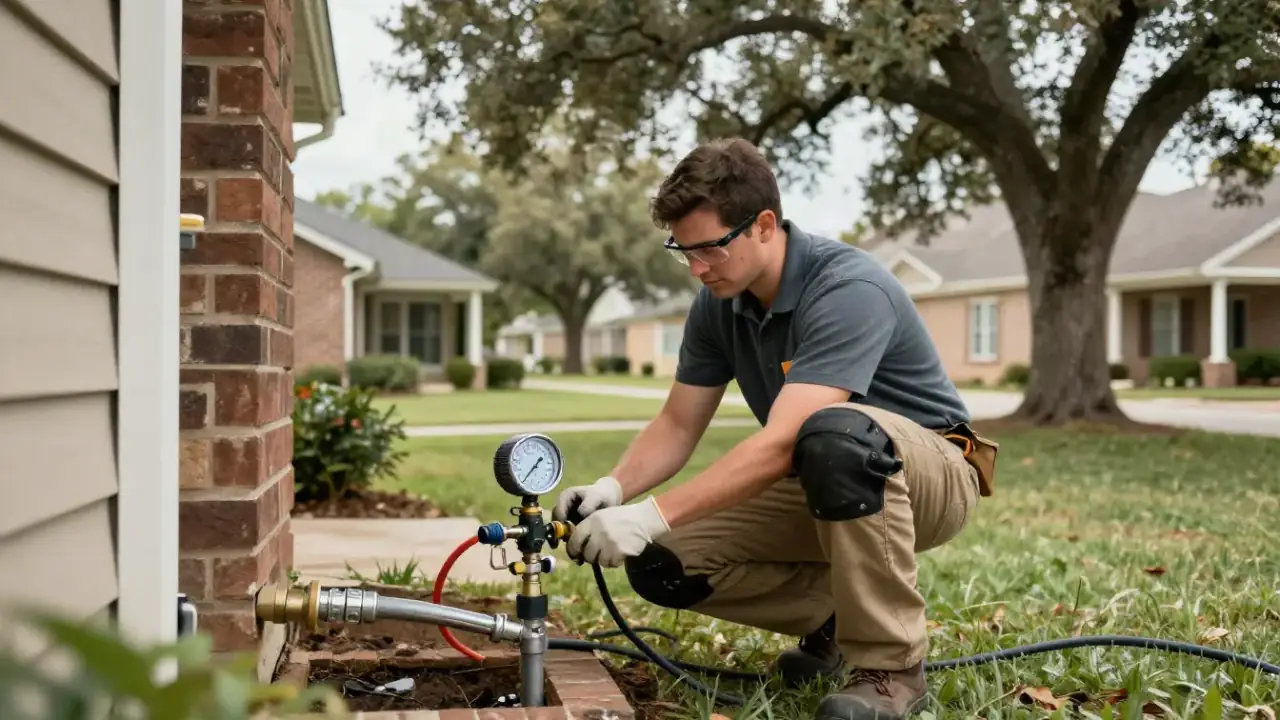
Call (281) 248-8538 and we will get a licensed tech scheduled, usually the same day. We answer the phone 24/7 for active leaks, and we cover Spring, Harris County, and the surrounding communities. Tell us what you are seeing and we will bring the right gear.