Focused arrival windows
Useful updates and clear arrival timing.
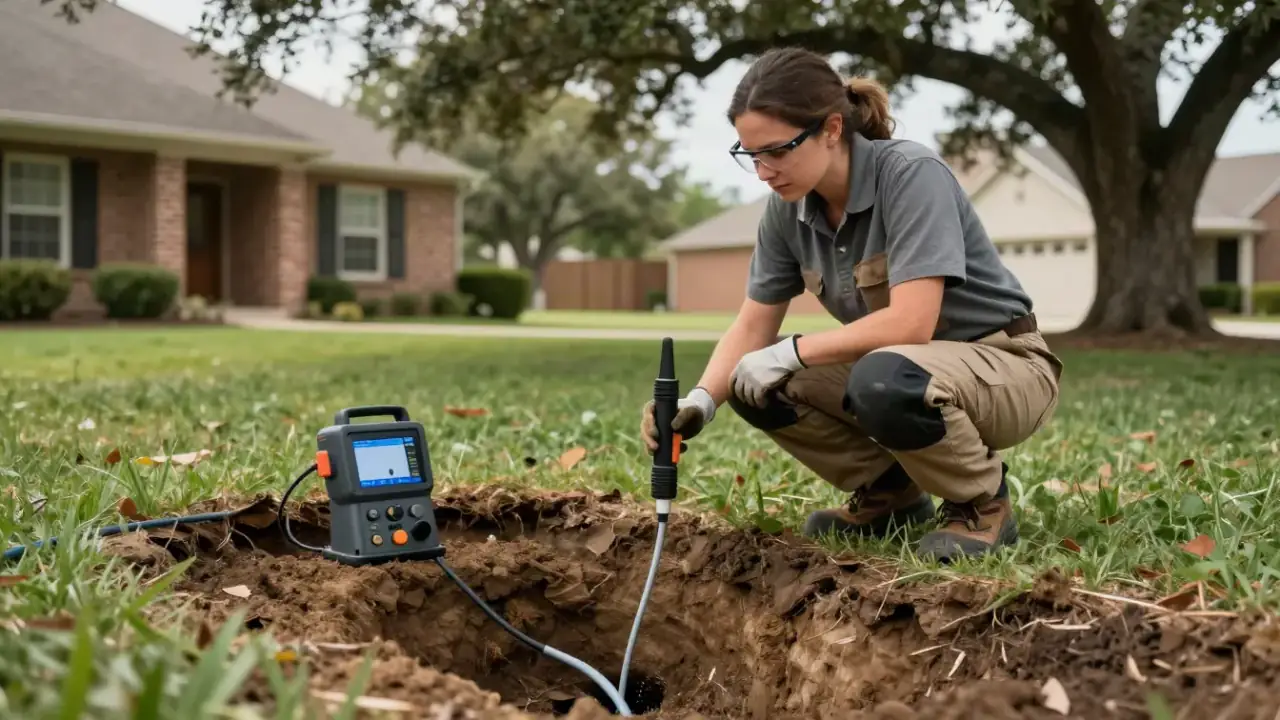
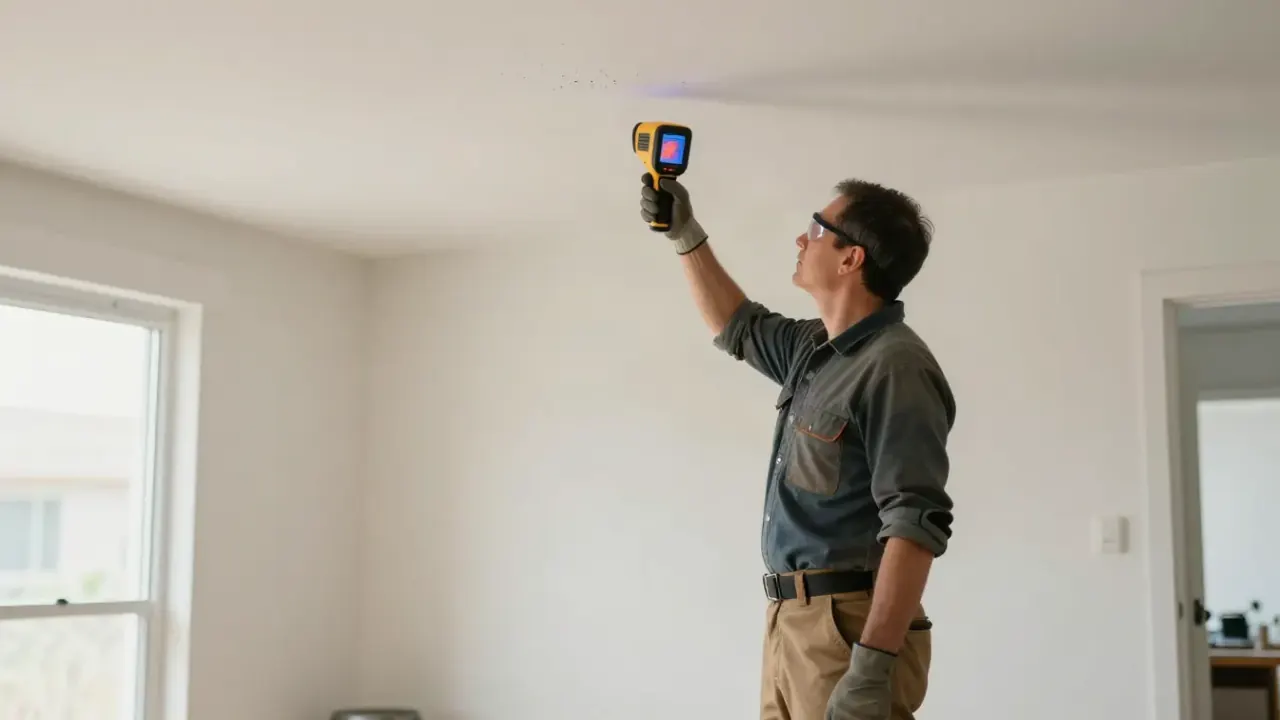
Ceiling and Wall Leak Repair Spring TX starts with finding the actual source, not painting over a stain. We use thermal imaging cameras and acoustic leak detection equipment to trace hidden pipe leaks behind drywall and above ceilings, then repair the pipe, dry the cavity, and restore the surface. If you have a brown ring spreading across your ceiling or bubbling paint on a wall, call (281) 248-8538 and we will pinpoint it the same day.
Useful updates and clear arrival timing.
Review the approach and price before deciding.
Equipped vehicles and respectful cleanup.
Neighbors serving neighbors with follow-through.
Every job covers source location, the plumbing repair, dry-out, and drywall restoration. Here is the breakdown so you know exactly what you are paying for.
Thermal imaging scan, moisture meter readings, and acoustic listening to confirm the exact source. You see the thermal image and the readings before we open anything.
Repair or replacement of the failed section on copper pipe, PEX tubing, PVC pipe, or CPVC pipe, including fittings and solder work, followed by a pressure test on the line.
Commercial air movers and dehumidifiers positioned to dry the wall cavity or ceiling void, running 24 to 72 hours with moisture checks until readings return to normal.
Treatment of affected framing and removal of saturated drywall. We photograph the open cavity so you have a record of the condition before it is closed.
New drywall hung, taped, floated, and textured to match the surrounding surface, then primed. Most ceilings are ready for final paint within two to three days.
Share what is happening and receive a clear next step from the local team.
Ceiling and Wall Leak Repair Spring TX is a two-part trade: locate the hidden water source, then rebuild what the water ruined. Water almost never drips straight down from the leak. It runs along joists, copper pipe, and PEX tubing, then shows up feet away from the failure. That is why we scan with a thermal imaging camera and a moisture meter before we cut anything. Once we confirm the source, we repair the pipe or fitting, dry the cavity, treat for mold, and patch the drywall so the repair disappears.
Spring homes deal with this constantly. Clay soil shifts through the summer drought and expands again in the fall rains, stressing underground lines and slab-adjacent pipe. Add 40-plus inches of annual rainfall and high humidity, and a slow wall water leak repair in Spring, Texas becomes a mold problem within about 48 to 72 hours. If you are searching for ceiling leak repair Spring TX near me because a stain grew overnight, that timeline is why we treat these calls as priority work.
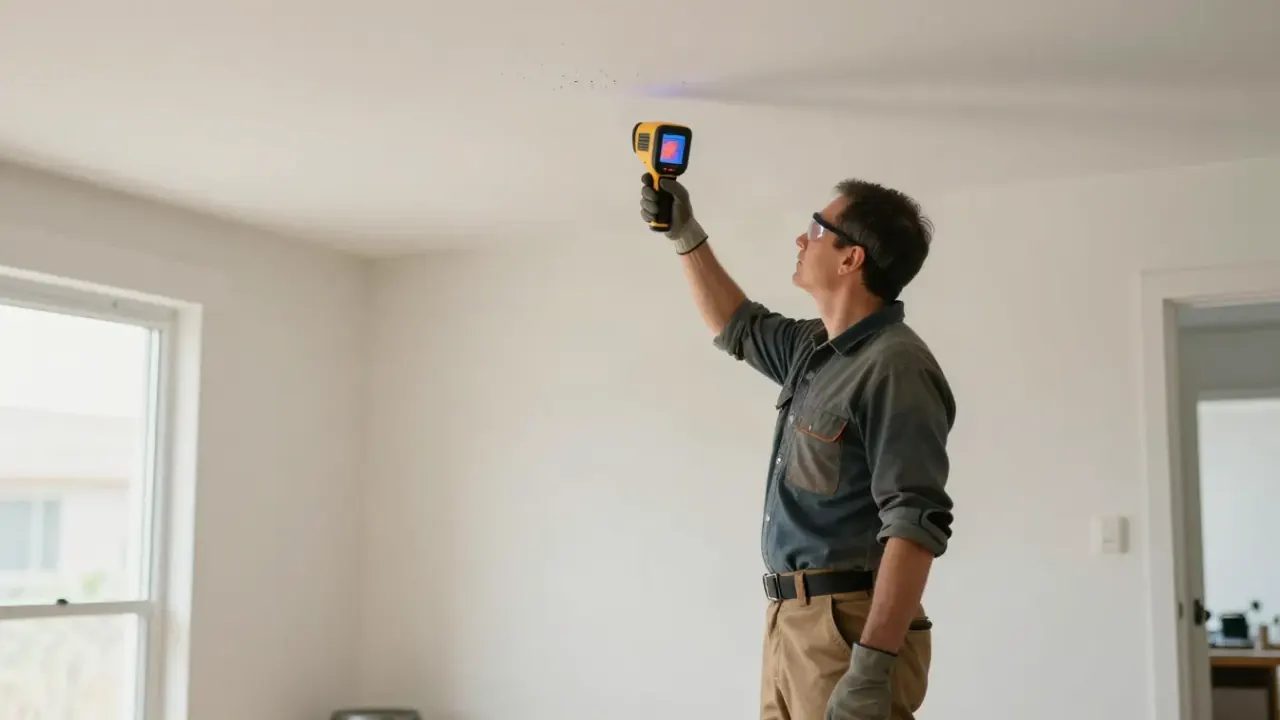
We ask where the stain is, how fast it is growing, and whether the water is running. You get an arrival window the same day for active leaks. If water is pooling near an electrical fixture, we tell you to kill that breaker before we arrive.
Our technician scans the ceiling and wall with a thermal imaging camera, then confirms with a moisture meter and acoustic leak detection equipment. On slab-adjacent walls we may run a pressure testing kit on the line. This step takes 45 to 90 minutes.
We open the smallest access needed, repair the failed copper pipe, PEX tubing, or fitting, then pressure-test the line. Commercial air movers and dehumidifiers run 24 to 72 hours depending on how wet the cavity is. You get a moisture reading before we close anything up.
Any framing or sheathing that stayed wet gets treated. Saturated drywall is removed and replaced, not dried in place. We photograph the cavity before closing so you have a record of what was behind your wall.
We hang new drywall, tape, float, texture to match, and prime the patch. Most ceilings are ready for final paint in two to three days. You get a walkthrough, the moisture readings, and a warranty on both the pipe repair and the finish work.
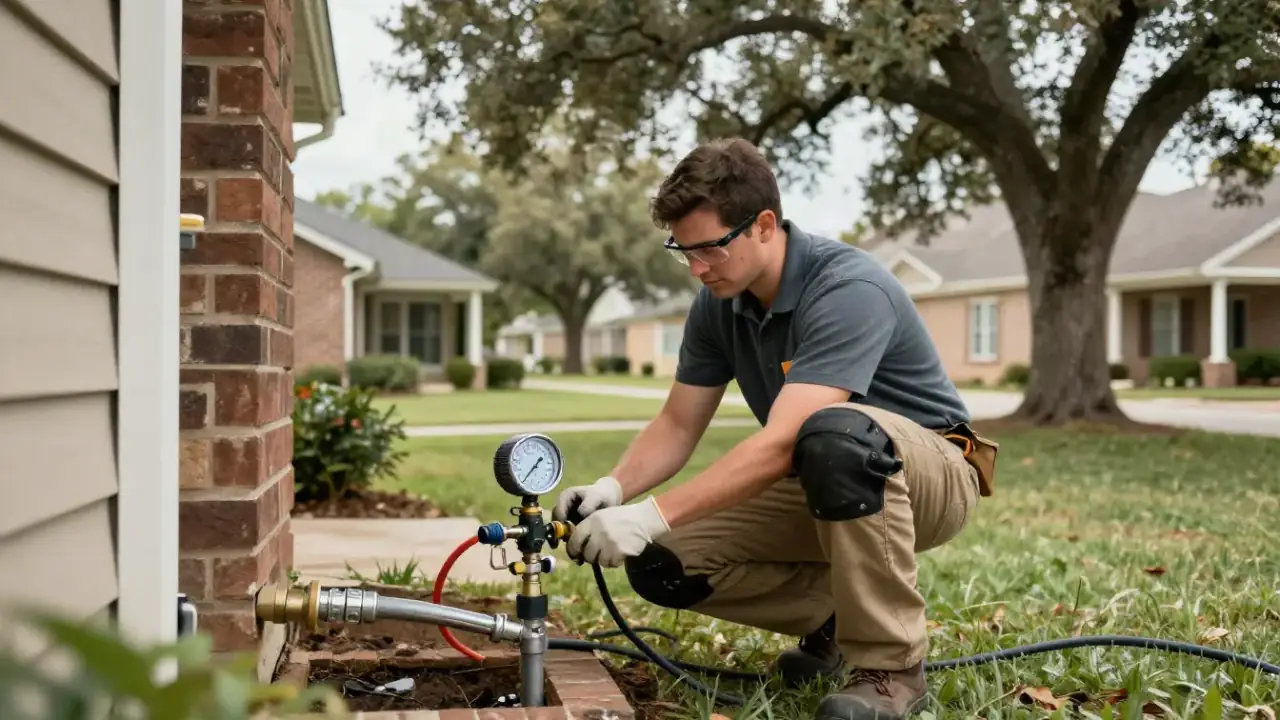
Maps temperature differences behind drywall and above ceilings to show where water is sitting, before any cutting starts.
Listens for the sound of pressurized water escaping a pipe, which pinpoints the failure even inside a closed wall cavity.
Reads moisture content in drywall, framing, and sheathing so we know exactly how far the wet zone extends.
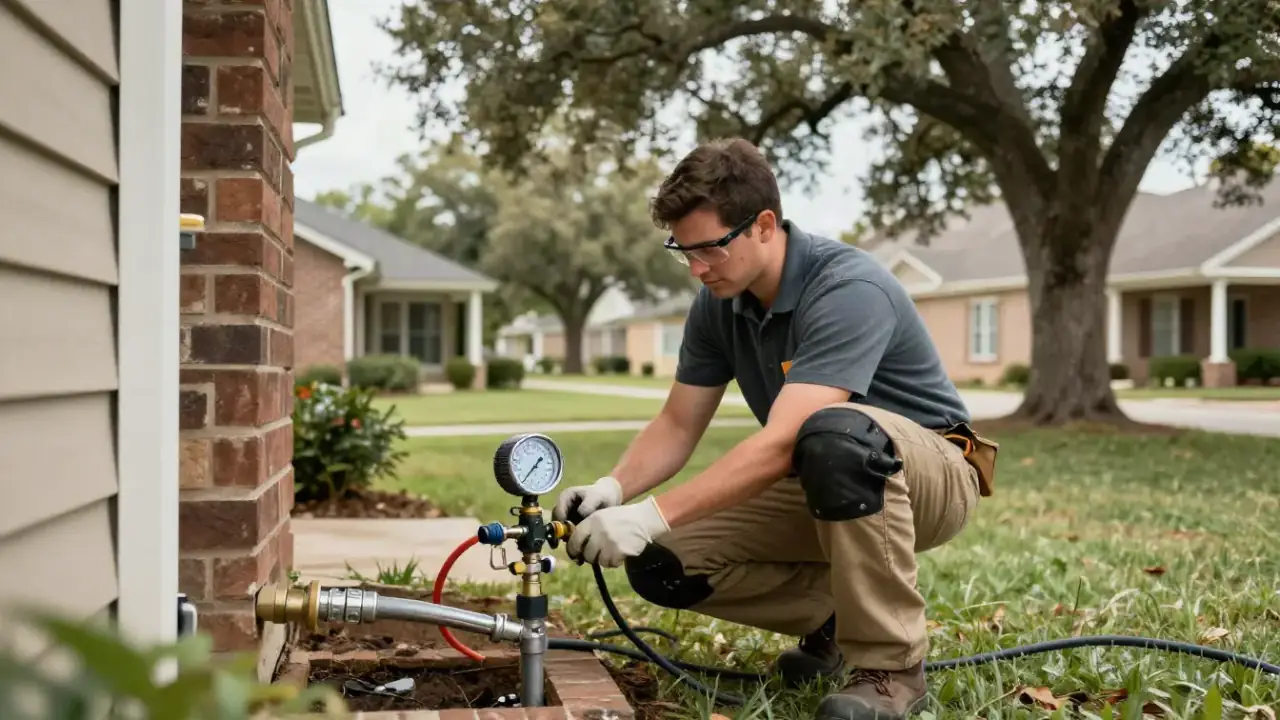
Isolates and pressurizes a line to confirm a suspected leak and verify the repair holds before we close the wall.
Looks inside drain lines and service piping to find cracks, joint failures, and root intrusion that cause wall and ceiling damage.
Traces the path of buried and in-wall lines so we know where to scan and where a repair access point makes sense.
Replaces failed underground sections without full excavation when the pipe material and layout allow it.
We combine thermal imaging with acoustic listening and moisture mapping to narrow the source to a few inches. This is the step that keeps us from opening three holes to find one leak.
By shutting valves and watching the meter, we determine which line is losing water. It is fast, non-invasive, and it tells us where to focus the thermal scan.
Repairs follow International Plumbing Code standards for materials, fittings, and support. Copper pipe, PEX tubing, PVC pipe, and CPVC pipe each get the correct joining method, not a universal shortcut.
We log moisture readings before and after drying and photograph the open cavity. You get a record that the structure was returned to normal moisture before the drywall went back up.
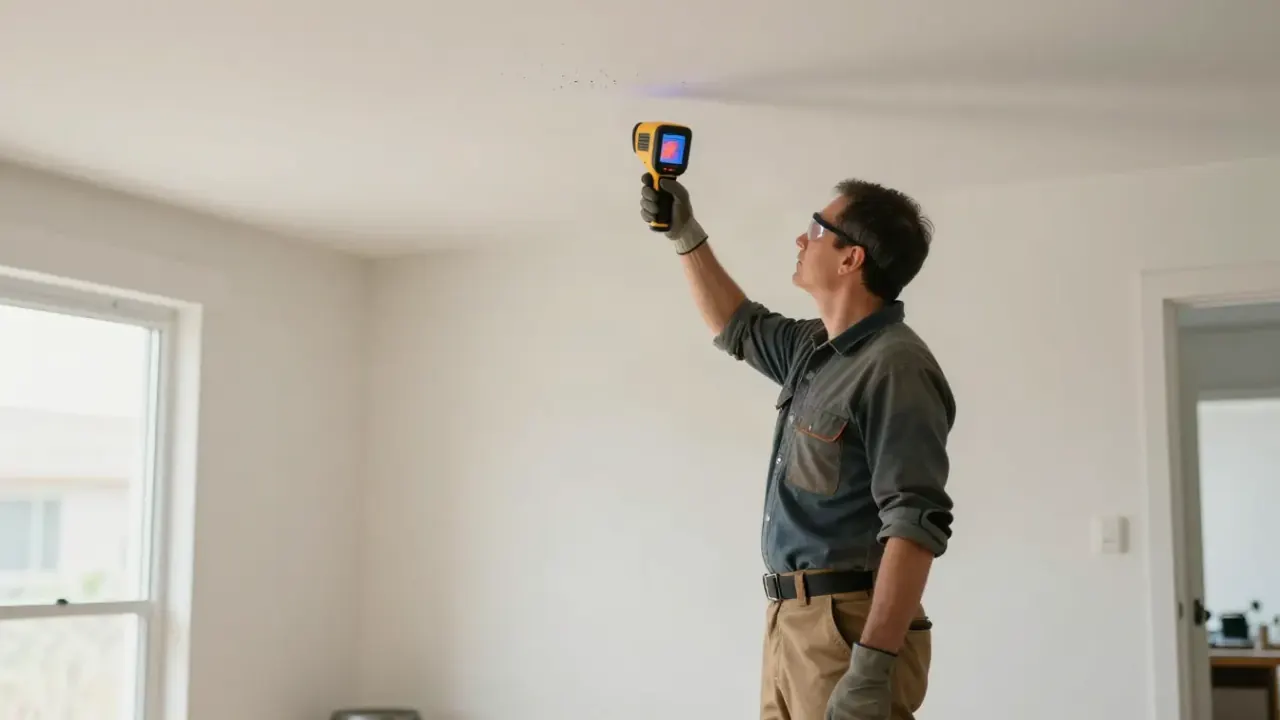
That pattern points to a supply or drain line running through the ceiling, not a roof leak. We scan with thermal imaging and confirm with acoustic listening, then repair the pipe and restore the ceiling. Source fixed, cavity dried, ceiling patched and textured. Most jobs like this finish in two to three days.
We pressure-test the lines in that wall, locate the failure, and open a single small access point. After the repair and dry-out, we replace the damaged drywall and baseboard section. Wall is flat, painted, and dry, with moisture readings on file to prove the cavity is sound.
We isolate the meter, test each zone, and trace the loss with a pipe locator and video pipe inspection camera where needed. Once found, we repair the line and check the interior for hidden moisture. Leak stopped, bill returns to normal within a cycle, and the room is dried and treated before mold sets in.
We trace the drain and supply lines from above, confirm the failure point, and repair it. The first-floor ceiling gets opened at the smallest point, dried, and restored. Both floors resolved in one scope, with the ceiling finish blended so the repair is invisible.
Spring sits on expansive clay soil, and that single fact drives most of the hidden leaks we find. The clay swells after heavy rain and shrinks in dry stretches, shifting foundations and stressing underground pipe and slab-adjacent lines. Combine that with humid summers that keep attic spaces hot and wet, and you get ideal conditions for wall water leak repair Spring, Texas calls. Homes here also run AC condensate lines hard from May through October, and a clogged drain line is one of the most common sources of ceiling stains we see. We work to International Plumbing Code standards, pull permits when the scope requires it, and coordinate with Harris County requirements on service line work. If you need emergency ceiling leak repair Spring, Texas at 2 a.m., we answer the phone and can walk you through shutting off the main at the meter before a technician arrives.
Older homes with original copper pipe and cast iron drains. We see more pinhole leaks and joint failures here than anywhere else in the area.
Two-story homes with second-floor bathrooms over living space. A supply line failure upstairs shows on the ceiling below within hours.
Attic runs of PEX tubing and copper are common. Summer attic heat, often over 130 degrees, ages fittings faster than most homeowners expect.
Slab-on-grade construction with supply lines under the slab. Clay movement here produces slab leaks that surface as wall staining.
Newer builds with PEX systems. Crimp ring failures and manifold issues are the usual culprits behind ceiling stains in these homes.
Movement stresses underground and slab-adjacent lines, producing leaks that migrate into walls and floors before showing on a surface.
Accelerates fitting and seal failure on attic pipe runs, and slows dry-out, so we run dehumidifiers longer on summer jobs.
Clogged condensate drain lines back up and overflow into ceiling cavities, a frequent cause of stains in the warmer months.
Pinhole leaks and joint failures are common, so we pressure-test older lines more aggressively before closing any wall.
A brown ring about 14 inches across had spread across the living room ceiling over four days. The attic above was dry, and the homeowner had already repainted once. Moisture meter readings showed the drywall was saturated through.
We traced a pinhole leak in a copper supply line with thermal imaging, repaired the section, and dried the cavity for 48 hours. The stained drywall was replaced, textured, and primed. Final readings matched dry reference points.
Maintenance: Keep attic temperatures in check and have copper lines pressure-tested every few years on older homes. A $185 to $350 location scan catches pinholes before they stain a ceiling.
Paint on a hallway wall had bubbled over roughly 3 square feet, and the baseboard was swollen. Two prior contractors wanted to open the entire wall to search. The homeowner wanted the source found first.
Pressure testing isolated the failure to one supply line. We opened a single 12-by-12 access point, repaired the fitting, dried the cavity for 72 hours, and replaced the damaged drywall and baseboard. The wall was painted and blended.
Maintenance: Watch for paint bubbling or a soft spot near baseboards. Catching it at the first bubble usually keeps the repair under $900 instead of a full wall rebuild.
A second-floor bathroom supply line failed and water showed on the first-floor ceiling below within a day. The ceiling had a wet patch about 2 feet wide, and the homeowner was worried about mold in the cavity.
We repaired the PEX crimp ring failure, dried both the upstairs subfloor edge and the downstairs ceiling cavity, treated the framing, and replaced the ceiling drywall. Moisture readings returned to normal in 60 hours.
Maintenance: Have PEX crimp connections checked during any bathroom remodel. A $200 to $400 inspection is cheap compared with a two-floor repair.
Water damage gets worse on a clock. These are the situations we get called for most, and how we stop them from spreading.
The stain grows every time the line runs, and the drywall above it is already saturated. Left alone, mold starts in 48 to 72 hours and the patch gets bigger. We scan the ceiling with thermal imaging, confirm the source, repair the pipe, dry the cavity, and replace the stained drywall. You get moisture readings showing the cavity is dry before we close it.
Paint bubbling means water is pushing from behind the drywall. The paper facing separates, the sheet loses strength, and the repair area grows the longer it sits. We pressure-test the nearby lines, find the failure, and open one small access point. After the pipe repair and dry-out, we cut out the damaged section and finish it flush with the rest of the wall.
A hidden pipe leak can waste thousands of gallons a month and quietly feed a wall or ceiling cavity. By the time the stain appears, damage has been building for weeks. We isolate zones at the meter, test each line, and use acoustic and thermal gear to find the loss. Once located, we repair the line and check the surrounding structure for moisture.
Odor without a visible stain usually means a slow leak inside the wall or above the ceiling. Mold from hidden leaks spreads through the cavity and into the room's air. We use a moisture meter to map the wet zone, trace the source, and repair it. Then we treat the affected framing and remove any drywall that stayed wet, so the smell does not return.
$450 - $1,800 depending on scope
Typical 2026 pricing in the Spring area runs $450 to $1,800 for a full ceiling or wall leak repair, including location, pipe repair, dry-out, and drywall. Leak location alone is $185 to $350. A simple accessible fitting repair may land near the low end, while a slab-adjacent failure with mold treatment and a large drywall patch pushes toward the top. We quote a range on the phone and confirm it after the source is found, so there is no surprise line item. If you are comparing affordable wall leak repair Spring TX options, ask whether drywall and drying are included. Ours are.
You are paying for diagnosis, repair, and restoration in one scope, warrantied from the pipe to the paint. Fixing the pipe alone and leaving wet drywall behind is how a $500 repair becomes a $3,000 mold job.
An accessible attic line is quick to find. A leak inside a closed wall, under a slab, or behind tile takes longer and more equipment, which raises the location portion of the bill.
Copper pipe, PEX tubing, PVC pipe, and CPVC pipe each need different repair methods. Working around cabinets, tile, or finished ceilings adds labor time.
A small stain means a small patch. Saturated drywall, wet framing, and a wide wet zone mean more removal, longer drying, and more replacement material.
If the cavity stayed wet past 72 hours, mold treatment and removal of affected drywall become necessary. That step adds both labor and disposal cost.
A flat white ceiling is straightforward to blend. Textured, painted, or specialty finishes take more time to match so the patch disappears.
Our technicians hold Texas State Board of Plumbing Examiners (TSBPE) credentials and work under a Master Plumber License, with Journeyman Plumber License holders running most field calls. We locate leaks on copper pipe, PEX tubing, PVC pipe, and CPVC pipe systems across Harris County, and we work to International Plumbing Code (IPC) standards on every repair. Crews carry OSHA safety certification and Backflow Prevention Assembly Tester certification. We have traced leaks in slab foundations, under-house crawlspaces, and second-floor walls across Spring, The Woodlands, and Tomball.
A brown ring showed up on our living room ceiling on a Sunday. They came out that afternoon, found a pinhole in a copper line in the attic with the thermal camera, and had it repaired by Monday. Drywall patch and texture look original. The moisture readings they left us made the insurance claim easy.
We had a wall in the hallway that kept bubbling paint. Two other companies wanted to open the whole wall. These guys pressure-tested the line, found the failure in about an hour, and cut one small square. Fixed the pipe, dried it, patched it. No mold, no drama, fair price.
I manage several rentals and use them for every ceiling leak call. They document everything with photos and moisture readings, which keeps my owners calm. Response is same-day, and the drywall work means I do not need a second contractor. That alone saves me a week per turn.
Most residential jobs run $450 to $1,800 in 2026, covering leak location, pipe repair, dry-out, and drywall. Location alone is $185 to $350. Cost climbs with slab involvement, second-story access, or mold treatment. We give you the range on the phone before we roll, and the price does not change once we confirm the source.
The three most common causes we find are failed copper pipe fittings in attics, cracked PEX tubing at crimp rings, and backed-up condensate drain lines from AC units running hard in our humid summers. Clay soil movement also stresses supply lines, which can push water up into first-floor walls.
Sometimes. If the leak is in an accessible attic run or a fitting behind a removable panel, we repair without opening the wall. When the failure is inside a closed cavity, we cut the smallest access needed, usually a 12-by-12-inch opening, and patch it as part of the job.
We do both halves: the plumbing repair and the drywall restoration. That matters because a ceiling stain returns if the pipe is fixed but the wet drywall is sealed over. One crew handles source, dry-out, mold treatment, and finish, warrantied end to end.
Not seeing your question? Our local team can help you understand urgency, scheduling and what to expect.
Ask the local team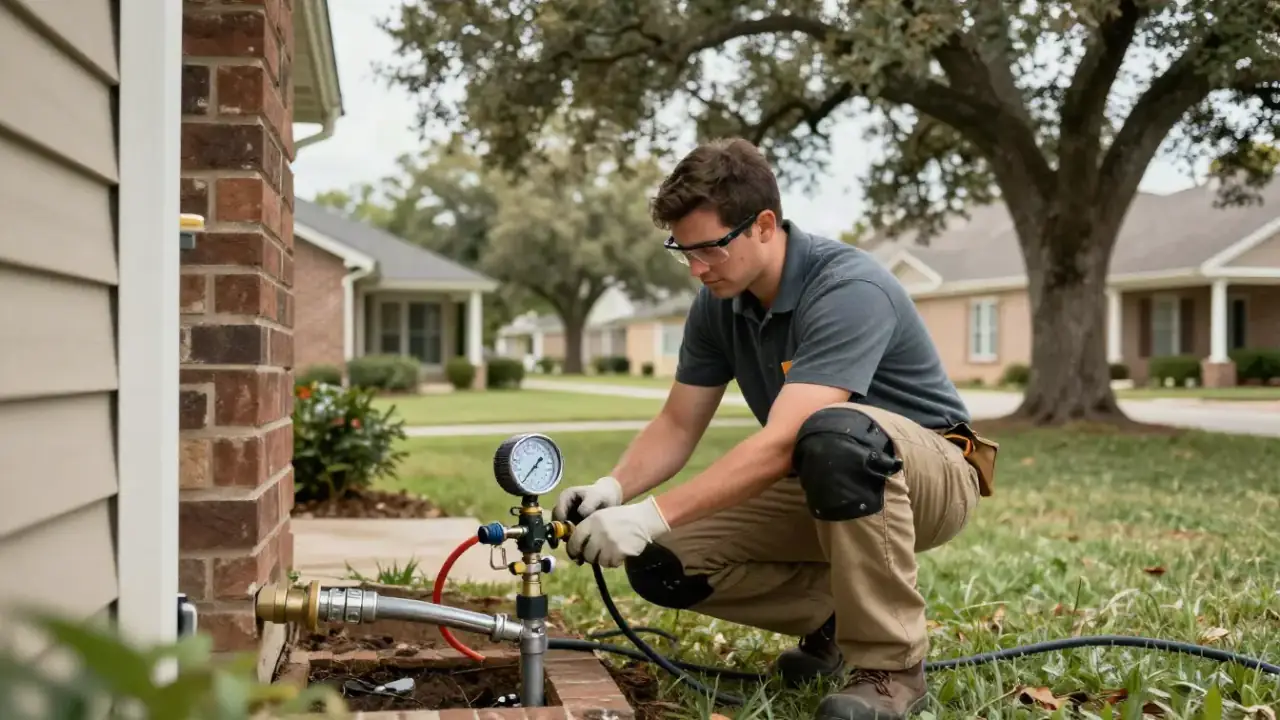
A slab leak on a first-floor line is one of the top causes of wall and baseboard staining. We locate it with acoustic and thermal gear, then repair with trenchless methods where the pipe allows, keeping your flooring intact.
View service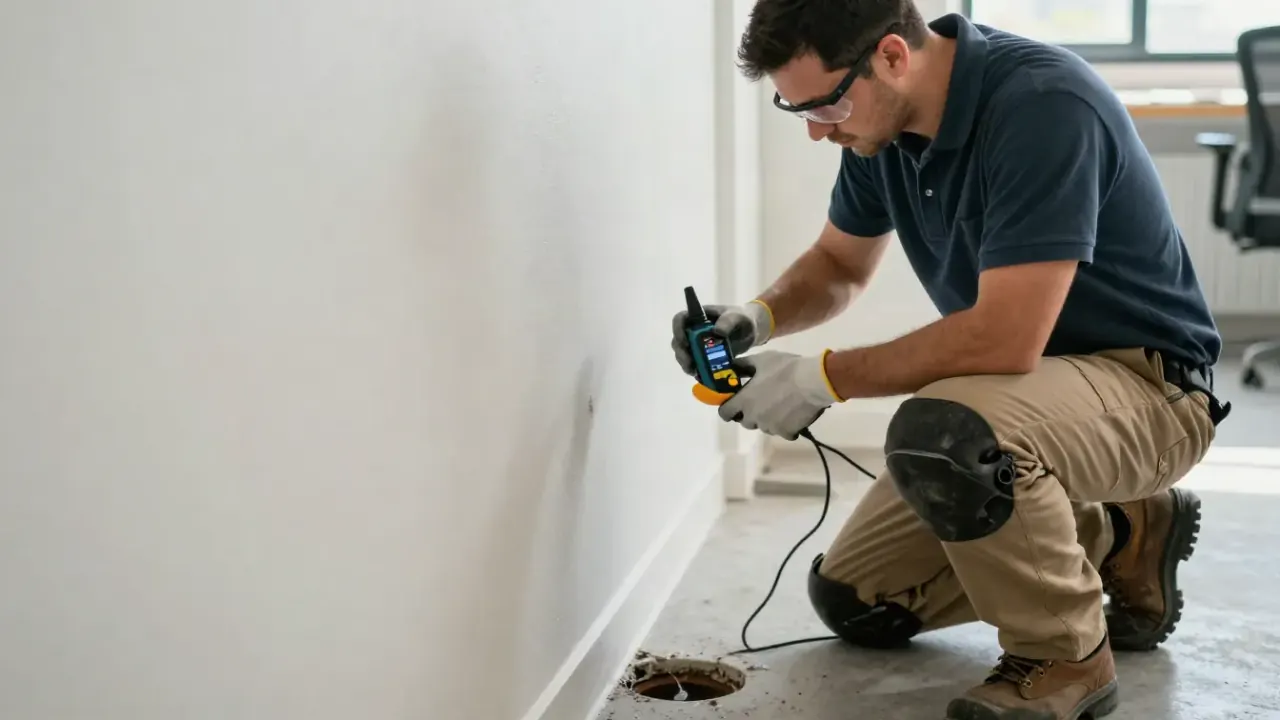
A ceiling stain plus a jumped water bill usually means an active hidden pipe leak. We isolate the meter, test each zone, and find the line that is running before it damages more drywall.
View service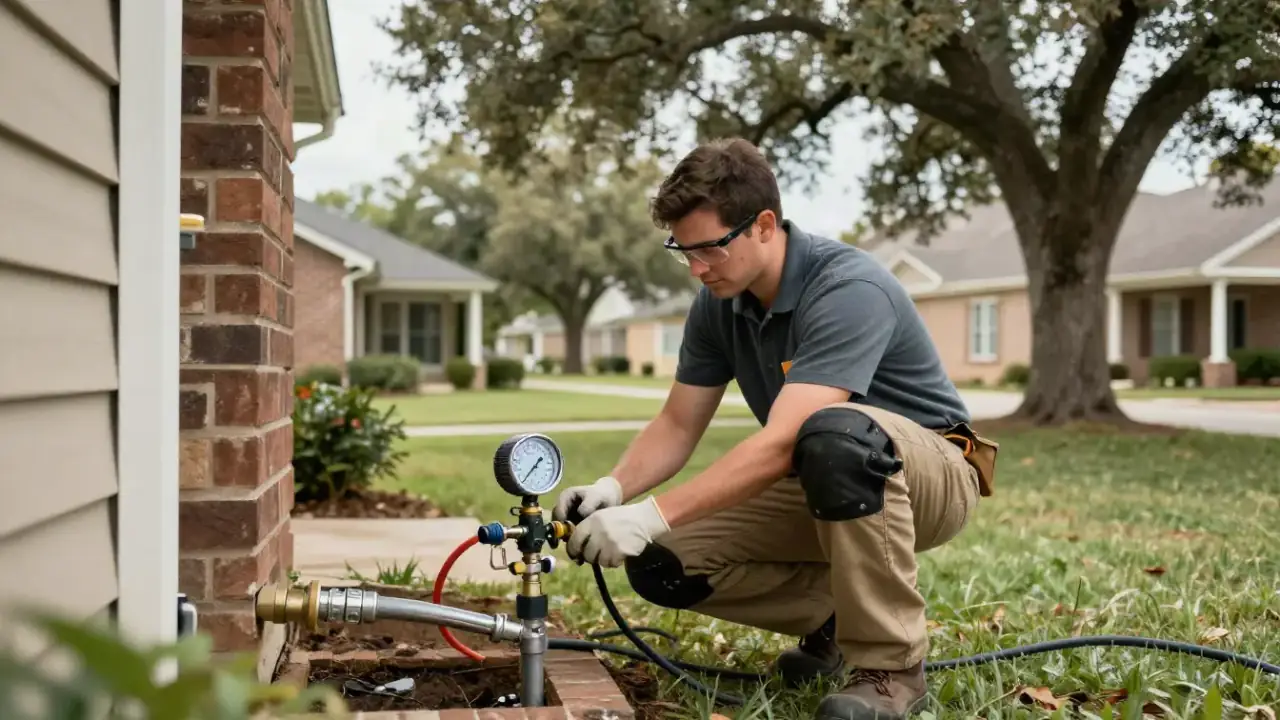
If your meter spins with every fixture off, water is escaping somewhere. We use that reading to narrow the search, then confirm with pressure testing before opening any ceiling or wall.
View service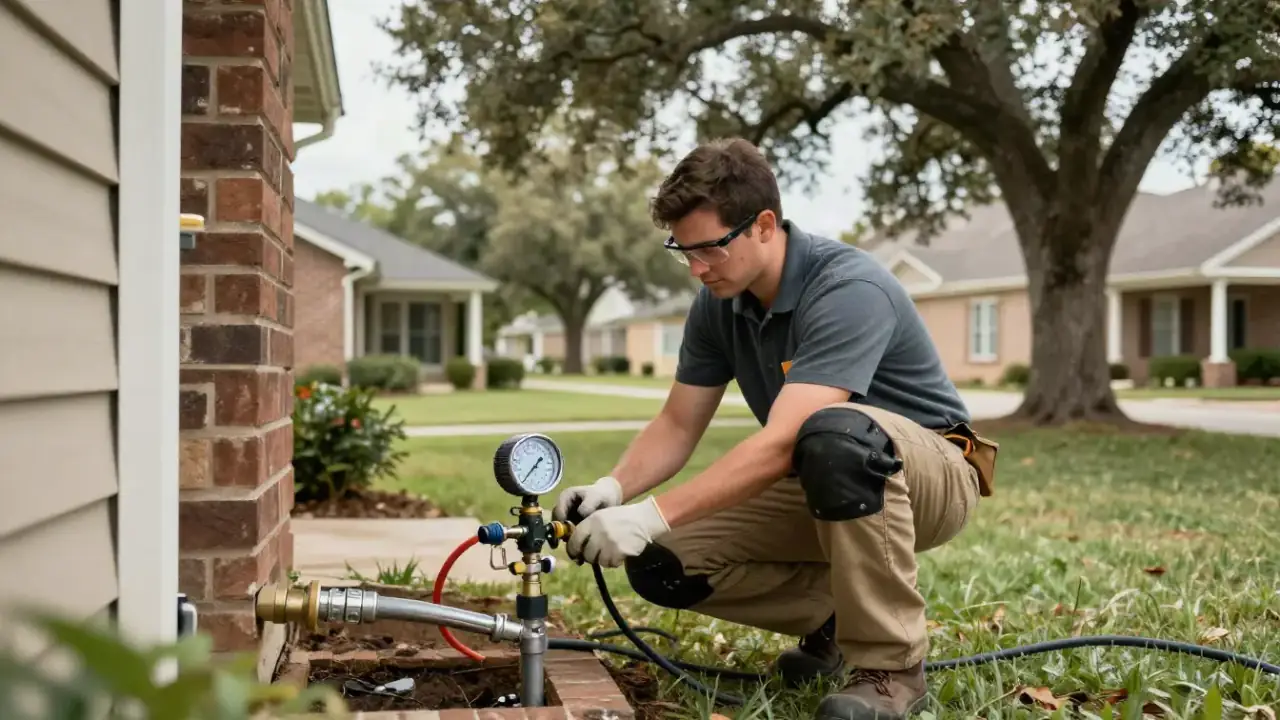
Failures on the line from the meter to your house can surface as wet walls near the entry point. We locate the break, repair or replace the section, and restore the interior damage.
View serviceCall (281) 248-8538 and we will get a licensed tech scheduled, usually the same day. We answer the phone 24/7 for active leaks, and we cover Spring, Harris County, and the surrounding communities. Tell us what you are seeing and we will bring the right gear.