What to Do When You Find a Stain on Your Ceiling
A ceiling stain in Spring TX means water is getting in from above. Here's how to find the source, stop the damage, and get it repaired before mold sets in.
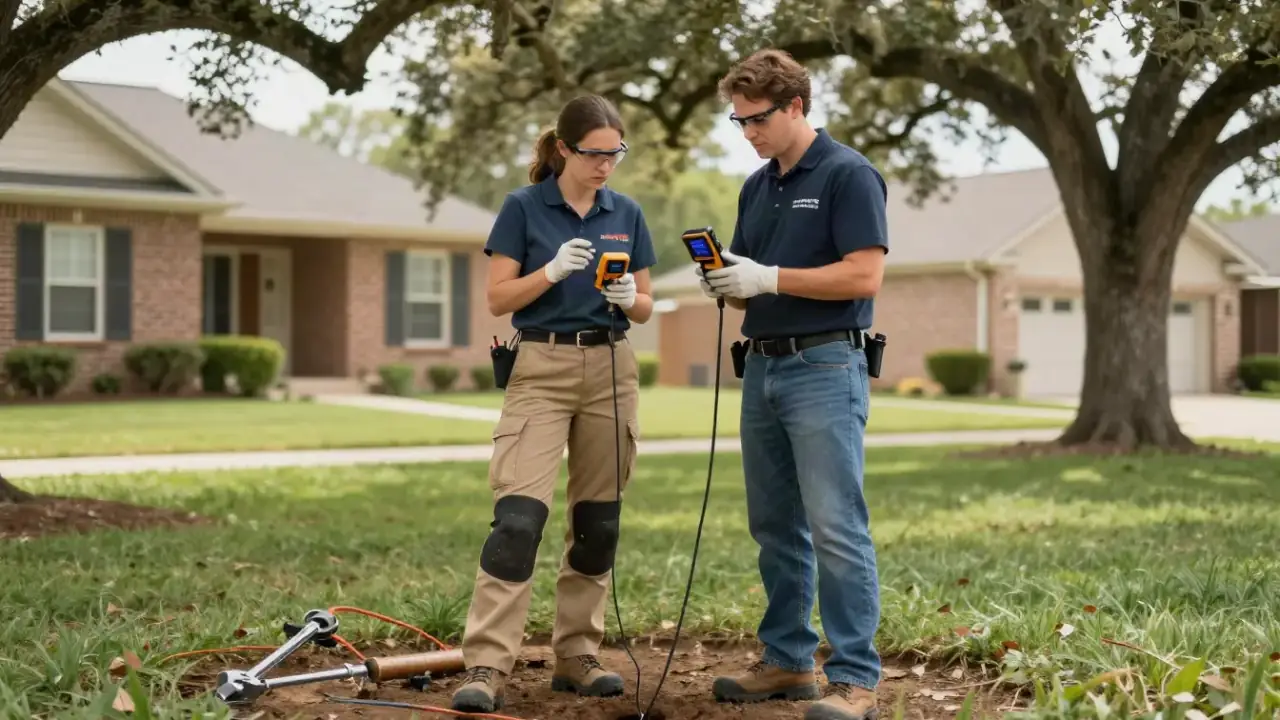
A ceiling stain in Spring TX almost always means water is actively leaking from above - a supply line, drain line, roof, or HVAC condensate pan - and the stain is the visible symptom, not the problem itself. The first two things to do are simple: put a bucket under the spot and stop using any fixture directly above it. Everything after that is about finding the source before the drywall, insulation, and framing absorb more water.
This guide walks through what a stain is telling you, how to trace the leak in a typical Spring home, what repair costs look like in 2026, and when it makes sense to bring in a professional. If you already know the leak is active and you cannot shut it off, call us at (281) 248-8538 - we run emergency ceiling leak repair in Spring TX and can usually get a tech out the same day.
What a Ceiling Stain Actually Tells You
A ceiling stain is a water mark left behind after moisture has soaked through drywall, evaporated, and pulled minerals and dust to the surface - the brown or yellow color is not dirt, it is the residue of that cycle. The size of the stain tells you how long water has been present, and the shape tells you roughly where it is coming from.
Ceiling stain what to do Spring TX is a question we hear every week, and the answer starts with reading the mark itself:
- Small, dark ring with a lighter center - recent, slow drip. Usually a pinhole in a copper supply line or a loose drain fitting.
- Large brown stain with a defined edge - water has been pooling above the drywall for weeks. Often a slab leak wicking up through the slab or a slow drain leak.
- Yellow or tan with a soft, spongy feel - active moisture right now. Press gently; if it gives, the drywall is saturated.
- Gray or black speckling - early mold growth. This moves from "repair" to "remediate" quickly in Spring's humidity.
One more thing: a stain that only appears after rain is almost never a plumbing leak. That points to the roof, a flashing detail, or a window penetration above. A stain that shows up after you run the shower, flush a toilet, or run the washing machine is plumbing.
First Steps: Contain the Damage Before You Diagnose
The first hour after you spot a ceiling stain matters more than the next three days. Water spreads laterally through drywall and insulation, so a stain the size of a dinner plate can mean a wet area three times that size behind the paint.
Do these in order:
- Kill the water source. If the stain is under a bathroom, kitchen, or laundry, stop using those fixtures. If you can identify the supply line, close the angle stop. If not, shut off the main at the street or at the interior shutoff valve.
- Relieve the pressure. If the drywall is bulging, poke a small hole at the lowest point of the bulge with a screwdriver and let the water drain into a bucket. A controlled pinhole beats a ceiling collapse.
- Move everything below. Furniture, electronics, rugs - get them out of the drip zone. Water that has traveled through drywall carries joint compound and sometimes fiberglass, and it will stain fabric.
- Document it. Photograph the stain, the bucket, and any damaged belongings before you clean up. Your insurance adjuster will want the timestamp.
- Call your insurer if the stain is larger than a foot across or if more than one room is affected. Most Texas homeowner policies cover sudden plumbing leaks but not long-term seepage, and the distinction often comes down to how fast you acted.
Do not paint over the stain yet. Sealing in moisture traps it against the drywall and guarantees a mold problem. Fix the leak first, let the area dry completely, then prime with a shellac-based stain blocker before you touch the ceiling paint.
How to Track Down the Source of a Ceiling Leak
Tracing a ceiling leak is a process of elimination, and in most Spring homes the culprit is one of five things. Work through them in order - the first four you can check yourself in about 30 minutes.
1. Supply lines and fixtures in the room above
Shut off every fixture on the floor above the stain, then watch the stain for 20 minutes. If it stops growing, the leak is in that room. Turn fixtures back on one at a time - toilet, sink, shower, tub - and watch for the stain to darken. The fixture that triggers it is your leak.
2. Drain lines and the toilet wax ring
A failed wax ring under a toilet leaks only when the toilet is flushed, which is why these stains often look intermittent. Pull the toilet base trim and look for water staining on the subfloor. A drain leak in a cast iron or PVC line above a ceiling will usually show as a stain directly below the trap.
3. HVAC condensate pan and drain line
In Spring, air conditioners run eight months out of the year and condensate pans overflow when the drain line clogs with algae. If the stain is near an air handler closet or directly under a second-floor return, check the pan first. This is the cheapest ceiling leak to fix - usually a $150 to $300 drain clearing.
4. Roof and flashing
Stains that only appear during or right after rain, especially on the upper floor or near a chimney, vent stack, or valley, are roof leaks. These are common in Spring after the spring storm season and hail events. A roofer handles these, not a plumber.
5. Slab or under-house leaks
If the stain is on a first-floor ceiling and you have already ruled out the fixtures above, the water may be coming up from below. This is where a Slab Leak Repair Spring TX specialist earns their keep - we use acoustic listening equipment and thermal imaging to pinpoint the break without tearing up the floor.
If you cannot isolate the source in an hour, stop guessing. A Ceiling and Wall Leak Repair Spring TX technician can trace it with moisture meters and pressure testing in about 90 minutes, which is far cheaper than opening three walls looking for the wrong pipe.
What Does a Ceiling Stain Mean in Spring TX?
A ceiling stain in Spring TX means water is entering from above and the drywall has already absorbed enough to wick minerals to the surface - it is not cosmetic, and it will not dry out on its own. Spring's average relative humidity sits above 70% most of the year, which means a wet ceiling cavity stays wet for weeks and mold can colonize in 24 to 48 hours.
The most common causes we see in this area, in order:
- AC condensate overflow - Spring's long cooling season makes this the number one cause of ceiling stains in two-story homes.
- Toilet wax ring or supply line failure - especially in homes built before 2000 with original fixtures.
- Slab leaks - common in the older neighborhoods around Leak Detection in Old Town Spring, where 1960s and 70s copper supply lines are now past their service life.
- Roof penetrations - after spring hail or wind events, flashing around vents and chimneys is the usual suspect.
- Shower pan or tub drain leaks - slow leaks that only show when the shower runs, often staining the ceiling below a second-floor bath.
If your water bill jumped and you have a ceiling stain, the two are probably related. A High Water Bill Investigation Spring TX can confirm whether the leak is on the pressurized side of your system, which is the kind that runs up your bill every hour of the day.
Should I Worry About a Water Stain on My Ceiling in Spring, Texas?
Yes - a water stain on your ceiling in Spring, Texas, is worth worrying about, because the visible mark is usually the smallest part of the problem. The real risks are structural and health-related, and they get more expensive every week you wait.
Here is what is actually at stake:
- Mold growth. Spring's humidity means mold can start within 24 to 48 hours of a leak. Remediation for a single affected ceiling cavity runs $1,200 to $3,500. A $250 leak repair prevents that.
- Drywall and insulation replacement. Saturated drywall loses its structural integrity and must be cut out. A 4x8 sheet of drywall plus insulation and labor runs $400 to $900 per section.
- Framing and subfloor rot. Long-term leaks rot joists and subfloor. This is when a $300 repair becomes a $6,000 to $15,000 structural job.
- Electrical hazard. If the stain is near a recessed light, ceiling fan, or smoke detector, water and wiring do not mix. Kill the breaker for that circuit until the leak is fixed.
- Insurance complications. Most policies cover sudden leaks but deny claims for "long-term seepage." A stain you noticed six months ago and ignored is exactly the kind of thing adjusters look for.
The good news: caught early, most ceiling leaks in Spring are a same-day fix. The bad news: the cost curve is steep. A stain you address this week is a repair. A stain you address next spring is a remodel.
Common Mistakes Homeowners Make With Ceiling Stains
The most expensive ceiling stain mistakes are the ones that look like reasonable decisions at the time. We see these constantly on callbacks and second-opinion visits.
- Painting over the stain. Kilz and stain-blocking primer hide the mark but trap moisture. The stain comes back within weeks, usually bigger, and now you have to cut out painted drywall.
- Assuming it is the roof. In Spring, more ceiling stains come from AC condensate than from roofs. Homeowners call a roofer first, pay a $400 inspection fee, and then call us anyway.
- Waiting for it to "dry out." It will not. The leak is still active, and the drywall is still wicking water. Every day you wait, the affected area grows.
- Cutting a big hole to "see what is going on." A 12-inch exploratory hole is expensive to patch and often misses the leak. A $200 moisture meter and a $150 thermal camera find it in minutes.
- Ignoring a second stain. Two stains usually mean two leaks, or one leak traveling along a joist. Either way, the source is rarely where the second stain appears.
- Not checking the water meter. If the meter's leak indicator is spinning with every fixture off, you have a pressurized leak - and it is running up your bill right now. A Water Meter Leak Diagnosis Spring TX confirms it in under an hour.
When to Call a Professional
Call a professional when you cannot find the source in an hour, when the stain is growing, when you see mold, or when the leak is under a slab or inside a wall. Those four situations cover about 80% of the ceiling stains we see in Spring, and each one gets worse - and more expensive - the longer it sits.
Our team at Spring Leak Detection handles ceiling leak detection Spring TX with acoustic listening gear, thermal imaging, and pressure testing. We find the leak, fix it, and test the line before we leave. No exploratory demolition, no guesswork, no repeat visits.
We work across Spring and the surrounding communities - from the older homes in Leak Detection in Gleannloch Farms to newer construction in Leak Detection in Auburn Lakes. If you are not sure whether your stain is a plumbing leak or a roof leak, we will tell you straight - and if it is a roof issue, we will point you to a roofer instead of charging you for a service call.
For the full range of what we handle, including Leak Detection Spring TX for residential and commercial properties, our team covers everything from a single pinhole to a full slab break.
Frequently Asked Questions
What does a ceiling stain mean in Spring TX?
A ceiling stain in Spring TX means water is leaking from above - usually an AC condensate pan, a toilet or drain line, a supply line, or a roof penetration. The brown color comes from minerals and dust the water pulled through the drywall. It will not dry out on its own; the leak has to be fixed first.
Should I worry about a water stain on my ceiling in Spring, Texas?
Yes. In Spring's humidity, mold can start within 24 to 48 hours, and saturated drywall loses structural integrity. A small stain addressed this week is a $200 to $500 repair. The same stain ignored for six months can become a $3,000+ mold and drywall job.
How do I fix a ceiling stain from a leak in Spring TX?
Fix the leak first, then the stain. Shut off the water, find and repair the source, let the cavity dry for 48 to 72 hours, then cut out any sagging drywall, prime with a shellac-based blocker, and repaint. Painting before the leak is fixed guarantees the stain returns.
Who repairs ceiling leaks in Spring TX?
A licensed leak detection and plumbing company handles the plumbing side - supply lines, drains, slab leaks, and condensate lines. Roofers handle roof penetrations. Spring Leak Detection repairs ceiling leaks across Spring and can usually schedule same-day service for active leaks.
How much does ceiling leak repair cost in Spring TX?
Typical 2026 pricing in Spring runs $250 to $600 for a standard supply or drain line repair, $800 to $2,500 for a slab leak, and $150 to $300 for an AC condensate line clearing. Drywall repair and repainting are separate and usually run $200 to $500 per affected section.
Get Help With Leak Detection in Spring
A ceiling stain is your house telling you something is wrong above it. The sooner you find the source, the cheaper the fix - and the less likely you are to be dealing with mold, rotted framing, or a denied insurance claim.
Call Spring Leak Detection at (281) 248-8538. We will find the leak, fix it, and test the line before we leave - usually the same day you call.