Hidden Leaks That Cause Mold and How to Spot Them
Hidden leaks that cause mold Spring TX are silent and slow. Here are the warning signs, the spots to check, and when to call a leak detection pro.
Hidden leaks that cause mold Spring TX are almost always slow, pressurized failures - a pinhole in a copper supply line, a cracked drain arm behind a vanity, or a slab line weeping under the foundation. Mold needs three things to grow: moisture, organic material (drywall paper, wood framing, carpet backing), and 24 to 48 hours of undisturbed time. A hidden leak delivers all three without ever showing a puddle on the floor. By the time you smell that musty, earthy odor, the colony is usually 10 to 14 days old and has already spread behind the baseboard.
We are Spring Leak Detection, and we run Leak Detection Spring TX calls every week in this exact situation - no visible water, but a smell the homeowner cannot place. This post covers why Spring's climate makes it worse, the seven leak sources we find most, the signs that separate a hidden leak from a simple spill, and how to confirm one before you cut into drywall.
Why Hidden Leaks Turn Into Mold So Fast in Spring, Texas
Spring, Texas sits in a humid subtropical zone where indoor relative humidity routinely runs 55% to 70% from April through October, and that is the number that matters for mold. Mold spores need 60% relative humidity at the surface to colonize. When a hidden leak wets drywall in a closet that already sits at 62% ambient humidity, you are not fighting a dry house - you are feeding an already-primed surface.
Our slab-on-grade construction makes this worse. Most Spring homes built from the 1970s through the 2000s have copper supply lines running beneath the slab. North Houston's clay-heavy soil expands and contracts with our wet-dry cycles, and that movement stresses the pipe until it cracks. Water wicks up through the slab and into the bottom plate of the wall. You never see a puddle because the concrete absorbs it. What you see, three weeks later, is black staining along the baseboard and a bulge in the drywall seam.
We see the same pattern in the older pockets of the area. In Leak Detection in Old Town Spring, the 1920s to 1950s cottages have galvanized steel supply lines that corrode from the inside out. A galvanized line can weep for months through a pinhole the size of a pen tip, and the wood framing behind it stays damp the entire time.
The 7 Most Common Hidden Leak Sources We Find in Spring Homes
Every hidden water leak mold Spring case we open traces back to one of seven places. Knowing where to look narrows the search from a whole house to a single wall cavity.
- Slab supply lines. Copper under the slab, stressed by soil movement. Warm spots on the floor and a creeping water bill are the tells.
- Drain lines inside walls. A cracked PVC drain arm behind a shower or vanity leaks only when that fixture runs, so the wall dries between uses and the leak hides for months.
- Toilet supply and wax ring. A slow wax ring failure soaks the subfloor and the ceiling below. The toilet still flushes fine.
- Water heater fittings and T&P valve. A weeping T&P drip line or a corroded nipple at the top of the tank keeps the pan and the surrounding drywall damp.
- HVAC condensate lines. A clogged condensate drain overflows into the ceiling pan and soaks the attic decking and the ceiling below it. This is the number one cause of ceiling mold we find in July and August.
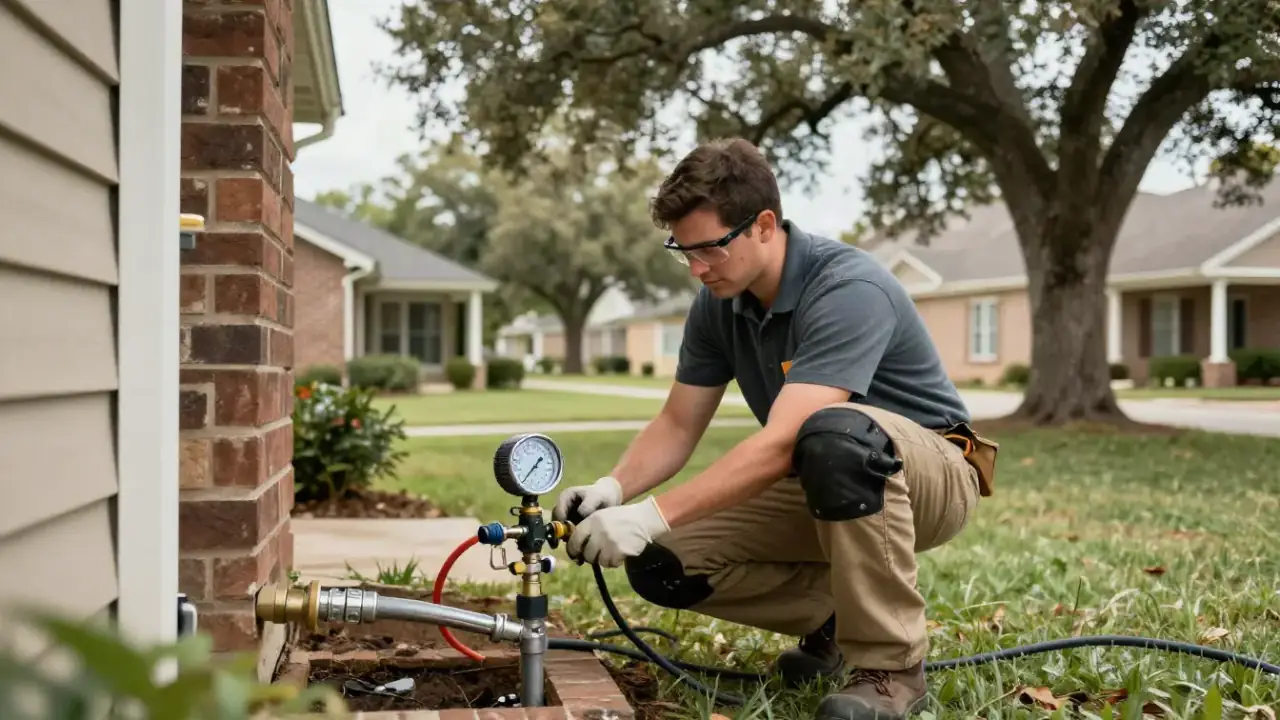
- Irrigation and hose bib lines. A cracked lateral under the lawn or a failed hose bib packing nut wets the exterior wall and the rim joist.
- Under-house plumbing. In the pier-and-beam homes scattered around the older parts of Spring, a drain leak in the crawl space keeps the joists at near-100% humidity year-round.
If your water bill jumped but nothing is visibly leaking, that is a different investigation. A High Water Bill Investigation Spring TX uses meter isolation and pressure testing to tell you whether the loss is on the supply side, the drain side, or the irrigation side before we open a single wall.
Signs of Hidden Water Leak Mold Spring TX Homeowners Miss
The signs of hidden water leak mold Spring TX are rarely dramatic. They are small, cumulative, and easy to explain away - which is exactly why the leak runs for weeks.
Watch for these, in roughly the order they appear:
- A musty, earthy smell in one room, strongest when the HVAC first kicks on. That is the smell of mold spores being pushed out of a wall cavity.
- Paint that bubbles or blisters along a baseboard, door casing, or ceiling seam. Bubbling paint means water is pushing from behind.
- A soft or spongy spot in the floor near a toilet, tub, or exterior wall. Press it with your thumb - if it gives, the subfloor is saturated.
- Dark staining or a tide line on drywall or ceiling texture, even a faint one. Mold growth often starts as a gray or brown shadow before it turns black.
- Warped baseboards or a gap where the baseboard meets the floor. Wet wood swells, then shrinks as it dries, leaving a visible gap.
- Increased allergy symptoms that improve when you leave the house and return when you come back. That pattern points to an indoor source.
- A water bill 10% to 20% above your seasonal baseline with no change in habits. A pinhole leak at 60 PSI can waste 30 to 50 gallons a day.
One sign alone is worth watching. Two signs in the same room means you should stop watching and start testing.
How Do I Know If a Hidden Leak Is Causing Mold in Spring TX?
You know a hidden leak is causing mold when you have both a moisture source and a musty odor or visible growth in the same area - one without the other is usually something else. A musty smell with no leak is often just a dirty evaporator coil. A water stain with no smell is often an old, dried event. When the two overlap in the same wall or ceiling, assume active moisture until a meter proves otherwise.
Here is the test we run first on almost every call. Shut off every fixture and appliance in the house, including the ice maker and irrigation. Find your water meter and watch the low-flow indicator - the small triangle or dial. If it moves, water is passing through the system right now. That is a confirmed hidden leak, and it is the fastest way to separate a real problem from a stain left by an old one.
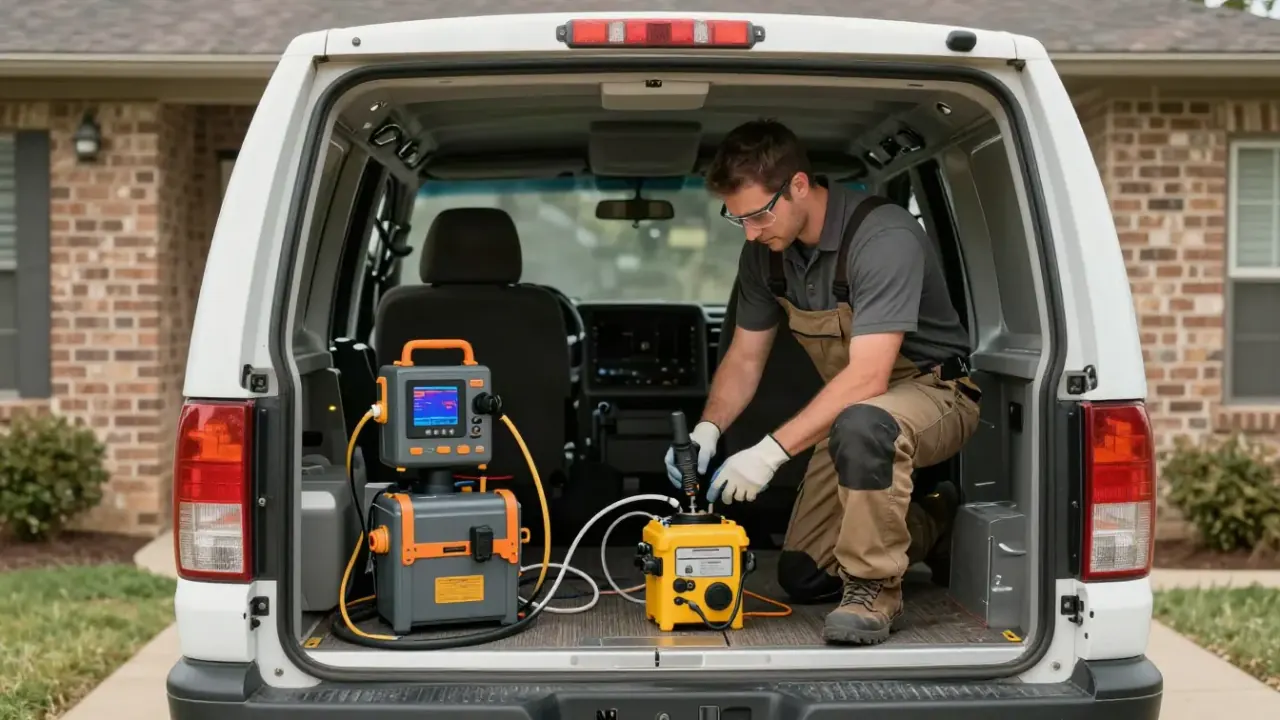
From there we use non-invasive tools before we cut anything: acoustic listening on the walls and slab, thermal imaging to find the temperature difference a wet cavity creates, and pressure isolation to determine whether the loss is on the hot side, the cold side, or the drain. A Water Meter Leak Diagnosis Spring TX on a suspected slab leak typically takes 45 to 90 minutes and tells us the exact fixture or line segment responsible.
If the leak has already reached the ceiling or a wall, the repair and the mold remediation are two separate jobs. We handle the water side - finding it, stopping it, and repairing the drywall and texture - through our Ceiling and Wall Leak Repair Spring TX service. Remediation of the mold itself is a licensed mold contractor's scope, and we will tell you plainly when you need one.
How to Spot Hidden Leaks Before Mold Takes Hold
Spotting a hidden leak early comes down to a 15-minute monthly walkthrough. Do it on the same day each month so you have a baseline to compare against.
Check the meter when nothing is running
Shut the house down and watch the low-flow indicator for two full minutes. Any movement is a live leak. This single habit catches more hidden leaks than anything else you can do.
Read your water bill against last year
Compare the same billing month year over year. A 2,000-gallon jump on a household that has not changed habits is a leak, not a rate increase. Spring's irrigation season runs roughly April through October, so factor that in before you panic about a summer spike.
Walk the perimeter of every wet wall
Run your hand along the baseboard on the back side of every shower, tub, and toilet. Feel for cool spots, soft spots, or a slight bulge. Look at the ceiling below any second-floor bathroom for a faint ring or shadow.
Sniff the closets and the attic access
Mold odor concentrates in still air. Open the closet behind the master shower and the attic hatch. If one smells mustier than the rest of the house, that is your search zone.
Watch the exterior too
A permanently soggy patch of lawn, a hose bib that drips after you shut it off, or a sprinkler head that never quite stops weeping all point to an exterior line leak that will eventually wick into the wall. Our Irrigation and Sprinkler Leak Repair Spring TX work starts with a zone-by-zone pressure check to find the failed lateral.
Common Mistakes That Let Mold Get Ahead of You
The most expensive mistake we see is painting over a water stain. Paint traps moisture against the drywall paper, and the mold grows behind the fresh coat where you cannot see it. You have not solved the problem - you have hidden it.
Other mistakes that cost Spring homeowners real money:
- Assuming a slow drain is just a clog. A drain that gurgles or backs up in one fixture only can be a partially collapsed or cracked drain line leaking inside the wall.
- Waiting for a puddle. Slab leaks and wall leaks often never produce standing water. The concrete and the framing absorb it.
- Running the AC harder to dry the room. That lowers the temperature but does not lower the moisture content of the drywall, and it spreads spores through the whole house.
- Cutting into drywall to look. You can open the wrong cavity, miss the leak, and create a new mold-friendly surface. Thermal imaging finds the wet zone first.
- Treating the mold without fixing the leak. Mold returns in 30 to 60 days if the moisture source is still active.
When to Call a Professional
Call us when you have confirmed meter movement with everything shut off, when two or more of the signs above appear in the same room, or when you smell mold and cannot find the source after a reasonable search. Those three situations almost always mean the leak is inside a wall, under the slab, or in the crawl space - places where guessing gets expensive.
We are a local, state-licensed plumbing contractor working Spring and the surrounding north Houston neighborhoods. We find the leak, fix it, and verify the line holds pressure before we leave. If the source turns out to be under the slab, we handle it through our Slab Leak Repair Spring TX service, which includes locating the break, rerouting or repairing the line, and restoring the slab surface. If it is in the crawl space, we work through Under-House Leak Repair Spring TX to repair the line and dry the joists before mold takes hold in the framing.
We also work in the newer master-planned communities where irrigation and pool systems create their own leak patterns. In Leak Detection in Gleannloch Farms, for example, the combination of large irrigated lots and long supply runs from the meter makes exterior line leaks a common call.
Frequently Asked Questions
How do I know if a hidden leak is causing mold in Spring TX?
You have a hidden leak causing mold when a musty odor and visible growth or staining appear in the same area, and your water meter's low-flow indicator moves with every fixture shut off. That combination confirms active moisture. A musty smell alone is often just a dirty AC coil.
What are signs of mold from a water leak in Spring, Texas?
The earliest signs are a musty, earthy smell in one room, faint gray or brown staining on drywall, and paint that bubbles along a baseboard or ceiling seam. Within 10 to 14 days of a slow leak, you will usually see a soft floor spot or warped baseboard nearby.
Can a hidden leak cause mold in my walls in Spring TX?
Yes, and wall cavities are the most common place we find it. A drain arm or supply line leaking inside a wall keeps the drywall paper and wood framing above 60% relative humidity, which is all mold needs. Spring's ambient humidity of 55% to 70% means the cavity rarely dries on its own.
Who fixes hidden leaks and mold in Spring TX?
A licensed plumber or leak detection company fixes the leak; a licensed mold remediation contractor handles the mold itself. We locate and repair the water source, restore the drywall and texture, and tell you plainly when the mold growth is large enough to require a remediation specialist.
How much does hidden leak detection cost in Spring TX?
Typical 2026 pricing for residential leak detection in the Spring area runs $250 to $450 for a standard slab or wall leak, and $150 to $300 for a meter or irrigation diagnosis. Repair costs are quoted separately once we know the location and pipe type.
Get Help with Leak Detection in Spring
If you smell something musty and cannot find the source, or your meter is moving with everything shut off, do not wait for the stain to spread. Mold grows on a 24-to-48-hour clock, and every day the leak runs is another day of framing and drywall damage.
Call Spring Leak Detection at (281) 248-8538 and we will find the leak, stop it, and verify the repair before we leave.