Acoustic and Thermal Methods for Finding Hidden Pipe Leaks
Acoustic listening pinpoints the hiss of escaping water; thermal imaging shows the warm streak it leaves behind. Here's how both work in Spring TX.
Acoustic and thermal leak detection are two non-invasive technologies that locate hidden pipe leaks without breaking into your slab, walls, or yard: acoustic equipment listens for the sound of pressurized water escaping a pipe, while a thermal camera reads the temperature difference that escaping water leaves on surrounding surfaces. Used together, they narrow a leak down to a spot you can measure in inches instead of guessing at a whole room. This post covers how each method works, what it costs in Spring, Texas in 2026, and which one makes sense for your leak.
Most of the homes we work on in Spring were built between the 1970s and the 2010s, and the plumbing under them has had decades of North Harris County soil movement to deal with. That is why we lean on both tools on nearly every job rather than picking one. If you want the short version of what we do, our water leak detection Spring service is built around exactly these two methods.
What Acoustic and Thermal Leak Detection Actually Does
Acoustic and thermal leak detection is a diagnostic category that uses sound and infrared temperature readings to find water escaping from pipes that are buried, embedded, or hidden behind finished surfaces. Neither method repairs anything - they exist to tell you exactly where to cut, so you cut once.
Here is the practical difference between the two:
- Acoustic: a sensitive microphone or ground sensor picks up the frequency of water hissing or spraying out of a pressurized line. Works best on lines with 40+ PSI behind them.
- Thermal: an infrared camera shows surface temperature differences. A hot-water leak reads as a warm streak; a cold-water leak under a slab often reads as a cool patch against warm concrete.
Neither tool sees through concrete. What they do is give us a signature - a sound or a temperature pattern - that we can trace back to a single point. On a typical Spring slab leak, the acoustic hit and the thermal hit land within 6 to 12 inches of each other, and that overlap is where we open the floor.
How Does Acoustic Leak Detection Work in Spring TX?
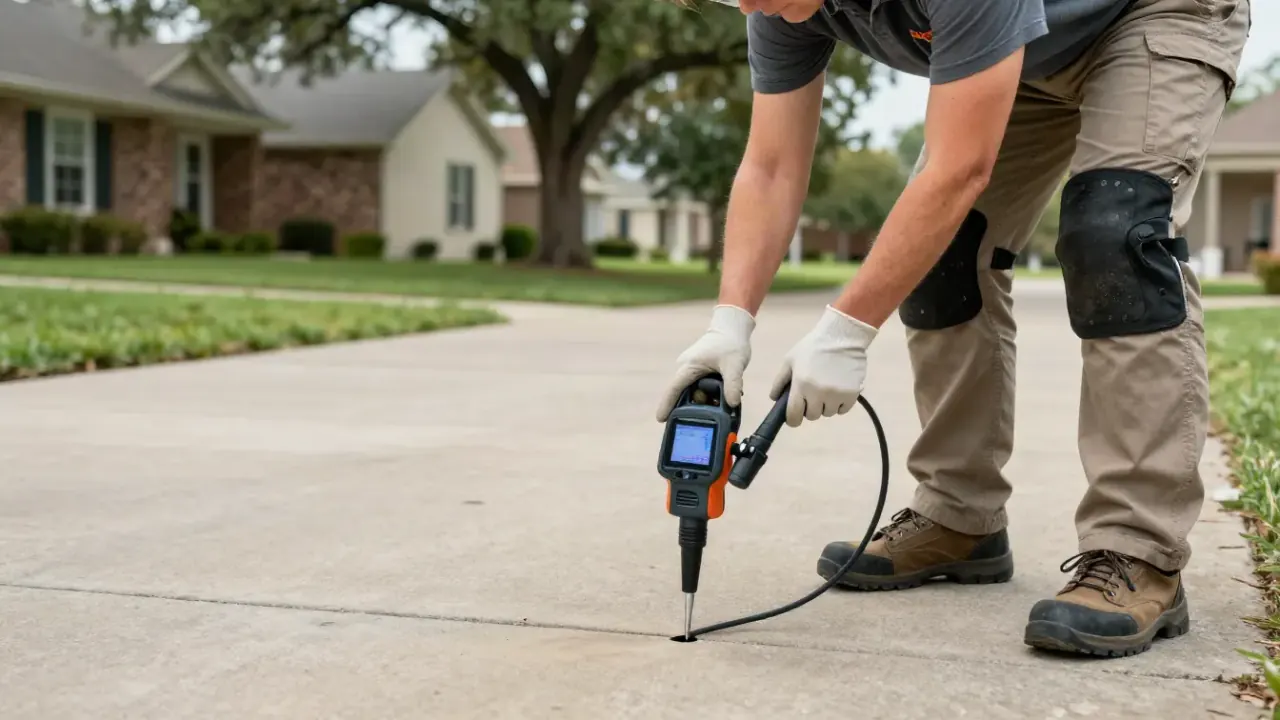
Acoustic leak detection in Spring works by placing a ground microphone or contact sensor directly against the slab, wall, or soil and listening for the specific frequency of pressurized water escaping a pipe - usually in the 1 to 4 kHz range for a pinhole, lower for a split. We isolate the zone first, then walk the sensor in a grid until the signal peaks.
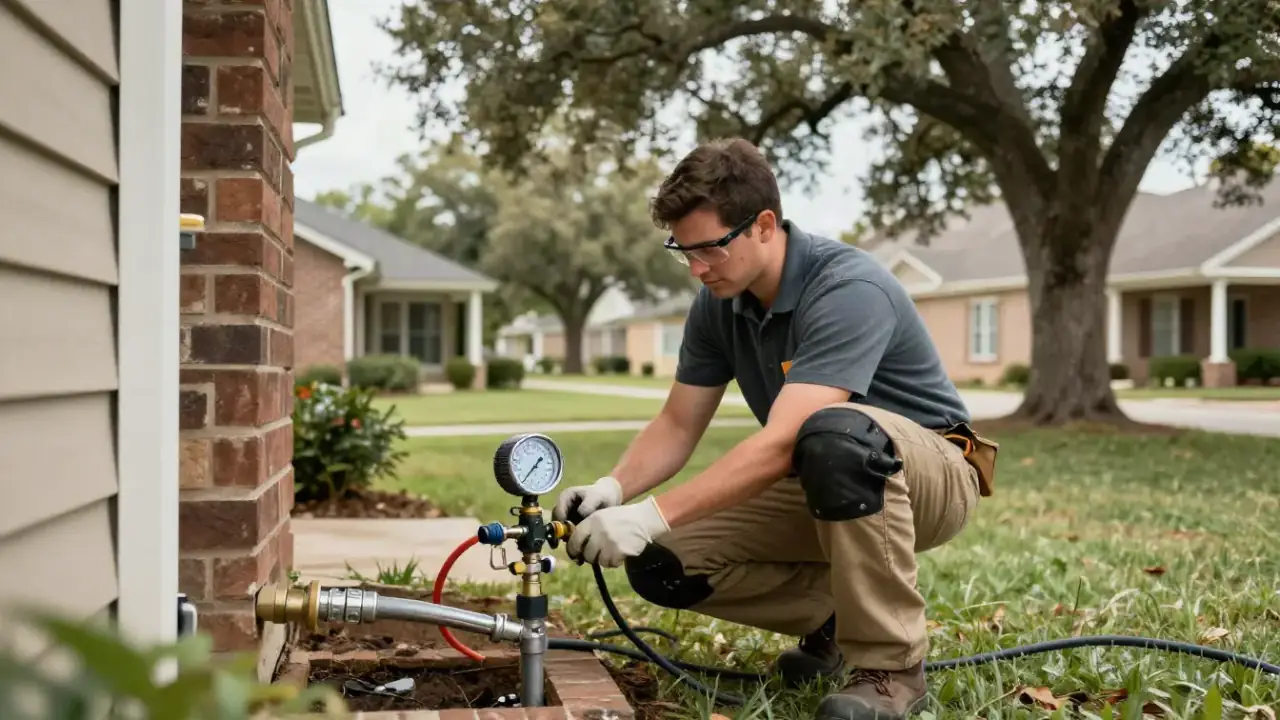
The setup matters more than the microphone. Before we listen to anything, we shut off every fixture in the house and confirm the meter is still moving. That tells us the leak is on a live, pressurized line and not a drain. Then we pressurize the system to its normal working pressure - most Spring homes run 55 to 75 PSI at the meter - and start the grid.
What the technician is actually listening for
A pinhole leak in copper makes a high, steady hiss. A failing CPVC joint makes a rougher, crackling sound. A slab leak on the hot side often has a slightly different tone because the water is moving faster and the pipe is expanding. Experienced ears separate those, and the sensor confirms it.
Acoustic is the stronger of the two methods for underground leak detection Spring work - irrigation lines, main service lines, and anything buried more than a few inches deep. Sound travels through saturated soil better than heat does, so when the leak is outside the footprint of the house, acoustic usually wins.
Where acoustic struggles
Acoustic gets muddy when there is a lot of ambient noise - a running AC condenser, a nearby road, or a washing machine on the other side of the wall. It also struggles on very low-pressure leaks, like a slow drip on a drain line, because there is no pressurized spray to hear. That is where thermal takes over.
Can Thermal Imaging Find Hidden Pipe Leaks in Spring, Texas?
Yes - thermal imaging for hidden leaks in Spring, Texas finds them reliably when the leak is on a hot-water line or when escaping water has had time to change the temperature of the surface above it. An infrared camera reads surface temperature to within about 0.1°F, which is more than enough to spot a 5 to 15 degree difference between a wet patch and dry concrete.
Thermal is the tool we reach for first on hot-water slab leaks, because a hot line under a slab will warm a strip of concrete along its entire run. You can literally see the pipe path on camera before you ever hear it. On a cold-water leak, the signature is subtler - the wet concrete reads cooler than the dry slab around it, especially in the morning before the sun loads the floor.
What thermal imaging cannot do
Thermal cameras do not see through walls or slabs. They see the surface. If a leak is deep enough or the slab is thick enough that the temperature difference never reaches the surface, thermal will miss it. That is the single biggest reason we do not rely on thermal alone.
Thermal also gives false positives. A duct running under a floor, a patch of shade, or a recently mopped tile can all read as a temperature anomaly. We confirm every thermal hit with acoustic before we mark a cut line.
Which Is Better: Acoustic or Thermal Leak Detection in Spring TX?
Neither is better on its own - acoustic wins on pressurized and buried lines, thermal wins on hot-water and surface-adjacent leaks, and the two together are more accurate than either alone. If you have to pick one for a first pass, pick acoustic for anything outside the house and thermal for anything under a finished floor.
Here is how we decide on a typical Spring job:
- Meter test first. If the meter spins with everything off, the leak is on a pressurized supply line. If it does not, the leak is likely on a drain or a fixture.
- Thermal sweep of the slab, walls, and ceiling in the suspect area. This gives us a rough zone in 10 to 15 minutes.
- Acoustic grid inside that zone. This pins the leak to a point.
- Confirm by pressurizing the isolated section and watching the gauge hold or drop.
That sequence is why a good leak detection visit in Spring runs 1.5 to 3 hours and costs $250 to $550 in 2026, depending on how many zones we have to sweep. It is also why we rarely open more than one hole.
The Spring TX Conditions That Make Both Methods Necessary
Spring sits on a mix of clay and sandy loam that swells when it is wet and shrinks when it dries, and that cycle moves pipes. A line that was perfectly bedded in 1998 can be under stress by 2026 without anyone touching it.
We see the pattern repeat across the area:
- Older neighborhoods with original copper or early CPVC - pinhole leaks and joint failures are common. We run a lot of Leak Detection in Old Town Spring on homes with plumbing from the 1970s and 1980s.
- Newer master-planned communities - the leaks tend to be at fittings and at the transition from the city main to the private service line. Our Gleannloch Farms Leak Detection calls often start with a high water bill and end at a service line fitting.
- Homes on irrigation - sprinkler zones run at lower pressure and leak quietly. Acoustic is the only reliable way to find a broken head or a cracked lateral without digging up the whole yard.
Summer is the busy season here. From June through September, the ground dries hard, the soil pulls away from the foundation, and we get a wave of slab leak calls. October through March is when irrigation and service line leaks show up, because the ground stays wet enough to keep the leak running without evaporating.
What to Watch Out For
The biggest mistake homeowners make is waiting for visible water. By the time a slab leak shows up as a warm spot on the floor or a buckling baseboard, it has usually been running for weeks.
Watch for these instead:
- A water bill that jumps 20% or more with no change in use. That is the single most reliable early signal.
- The meter spinning with every fixture off. Ten minutes of watching the leak dial tells you more than an hour of guessing.
- A hot spot on the floor that does not match the sun's path.
- Musty smell in a closet or under a cabinet - that is usually a slow leak feeding mold, not a drain issue.
- Sound of running water at night when the house is quiet.
Two more things to avoid. First, do not let anyone sell you a repair before they have located the leak with actual equipment - a contractor who quotes a slab repair from a visual inspection alone is guessing. Second, do not assume a low water bill means you are fine. A pinhole leak the size of a pencil tip can waste 10,000 to 30,000 gallons a month before it ever surfaces.
If the leak is under the house rather than in the slab, the approach changes. Crawl space leaks need a different access plan, and we handle those through our crawl space leak repair Spring service.
When to Call a Professional
Call a professional the moment your meter spins with everything off, your bill jumps without explanation, or you find warm or damp spots on a floor that has no plumbing fixture above it. Those three signs point to a pressurized leak, and pressurized leaks do not stop on their own.
Spring Leak Detection carries the acoustic ground sensors and infrared cameras that make this a one-visit diagnosis instead of a process of elimination. We find the leak, tell you what the repair involves, and give you a flat price before we open anything. If the leak turns out to be on the main line coming into the house, we handle that too - see our main water line repair Spring page for what that job looks like.
Frequently Asked Questions
How does acoustic leak detection work in Spring TX?
We pressurize the line, place a ground microphone on the slab or soil, and walk a grid until the sensor peaks on the sound of escaping water. A pinhole leak typically registers in the 1 to 4 kHz range. The peak point is where we mark the cut.
Can thermal imaging find hidden pipe leaks in Spring, Texas?
Yes, especially on hot-water lines and slab leaks. An infrared camera reads surface temperature to about 0.1°F and can show a 5 to 15 degree difference between wet and dry concrete. It cannot see through a slab, so we confirm every thermal hit acoustically.
Which is better, acoustic or thermal leak detection in Spring TX?
Acoustic is better for buried, pressurized, and outdoor lines; thermal is better for hot-water and under-floor leaks. On most Spring jobs we use both, which cuts the search from hours to about 1.5 to 3 hours and usually means one access hole instead of three.
Do you offer thermal leak detection in Spring TX?
Yes. Every Spring Leak Detection visit includes an infrared sweep of the suspect area before we bring out the acoustic gear. The two methods are bundled into one diagnostic visit, priced from $250 to $550 in 2026 depending on the number of zones.
How accurate is acoustic leak detection?
On a pressurized line at normal household pressure, acoustic typically locates the leak within 6 to 12 inches. Accuracy drops on very low-pressure leaks or in high ambient noise, which is why we cross-check with thermal and a pressure hold test.
Get Help with Leak Detection in Spring
If your meter is spinning, your bill is climbing, or you have a warm spot on the floor you cannot explain, we can find the leak and tell you exactly what it takes to fix it. Call Spring Leak Detection at (281) 248-8538 and we will schedule a diagnostic visit.